Pakistan – 5 x 8000m Base Camps Trek
Raw and rugged. We found Pakistan to be a safe and welcoming country. Our goal: trek to the 5 x 8000m mountain base camps located in the Gilgit-Baltistan region of Pakistan-administered Kashmir.
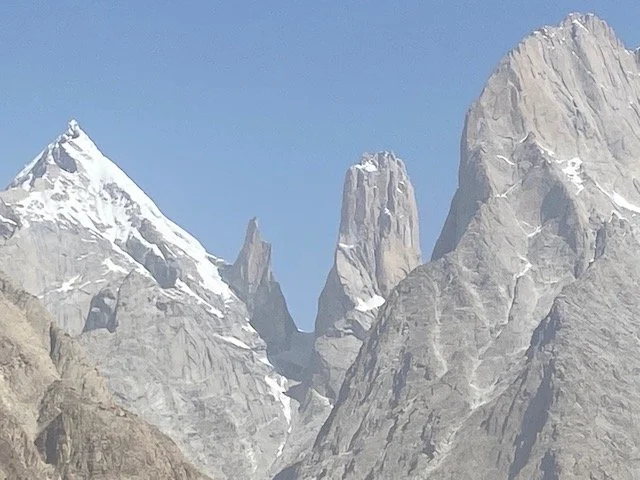
Zabardast! (“wonderful”!) – Uli Biaho (centre) as seen from the Baltoro Glacier
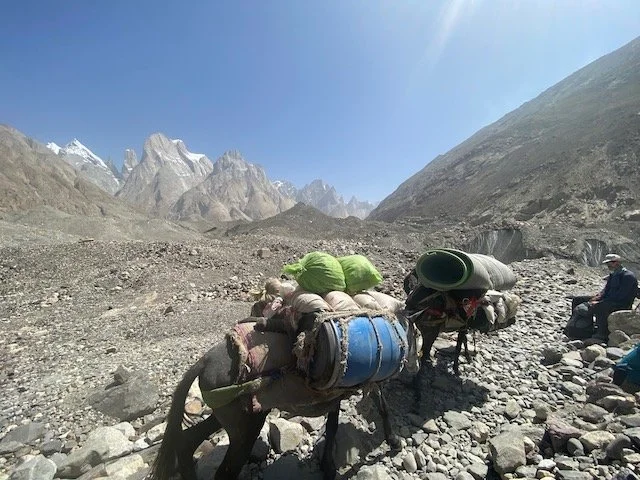
Mules walking up the Baltoro Glacier towards Concordia
Introduction
It’s hard to sum up our experience of this region. On the one hand, it feels like a crater on the moon – raw and rugged with a beautiful landscape. On the other, it holds a certain edge to it. Whatever you think, we found the Balti people of Gilgit-Baltistan warm and hospitable. We always felt safe in their company.
The first thing that strikes you when you see these 5 x 8000ers is their beauty – from the bottom to the top. The Karakoram mountain range is strikingly different to the Himalayan range of Nepal.
Islamabad
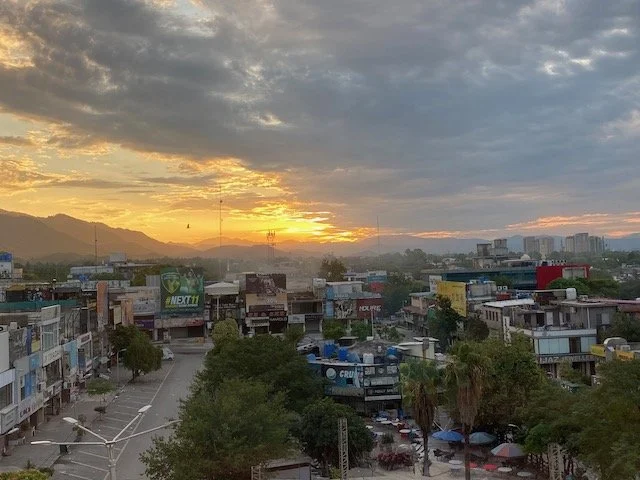
Islamabad is a purpose-built capital city divided into zones and can be ‘sterile’ in its organised street plan.
Arriving at the modern airport late at night, we were confronted by the locals hustling you for a taxi. Trusting them to take you where you needed to go was an exciting encounter. Having rats in your hotel room was something else. Welcome to Pakistan!
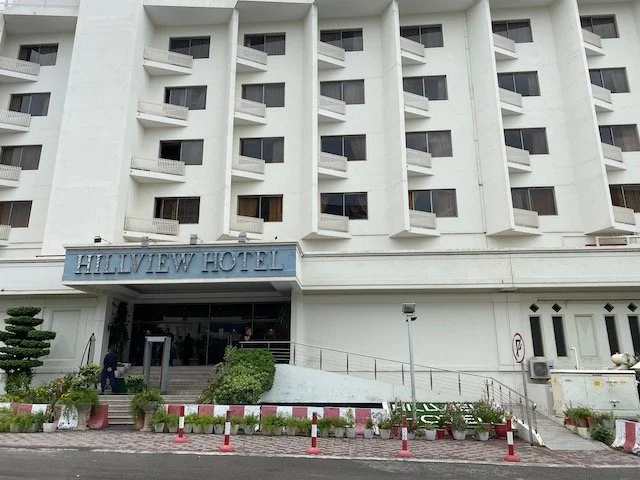
However, we did find some great coffee and places to eat and chill out for a few days at either end of our trek.
The Approach
In resuming our project to trek to all 14 x 8000m base camps, this was always going to be the ‘big one’. Tackling all 5 x 8000m base camps accessed from Pakistan – Broad Peak, K2, Gasherbrum’s I and II, plus Nanga Parbat.
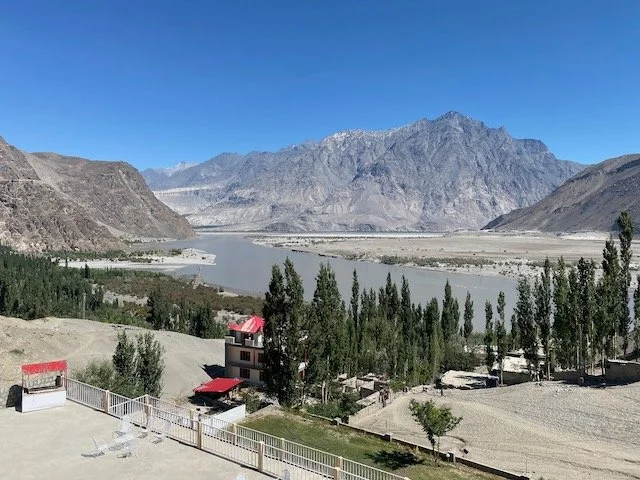
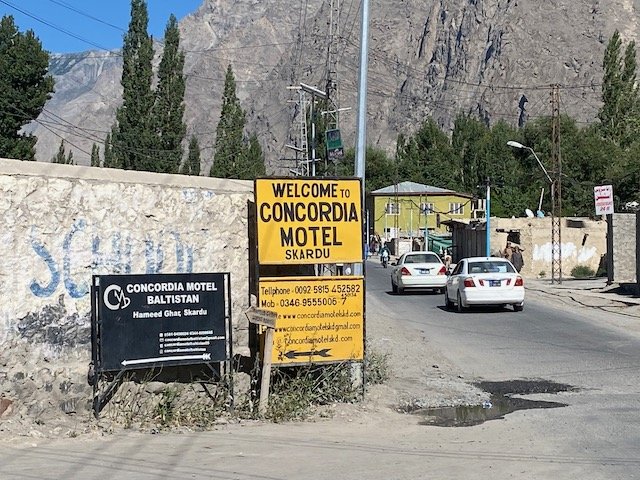
We flew to Skardu from Islamabad after heading off with 15 other intrepid and adventurous trekkers. Before landing in Skardu, we flew past Nanga Parbat (8,126m), the ninth-highest mountain in the world and with a reputation for being more dangerous than K2. More on that magic mountain later.
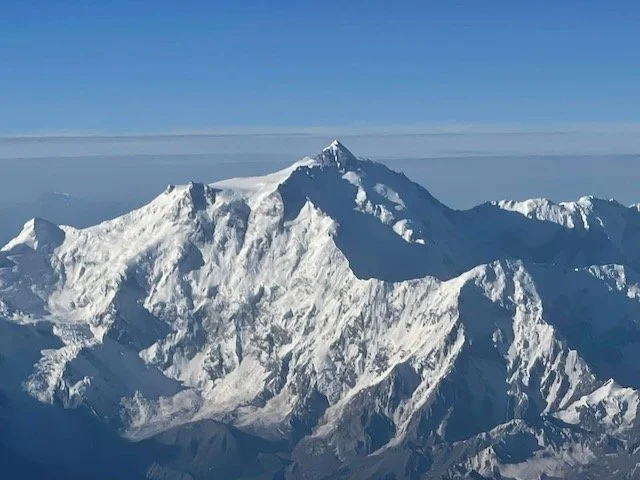
Nanga Parbat (photo: Mark Lawson)
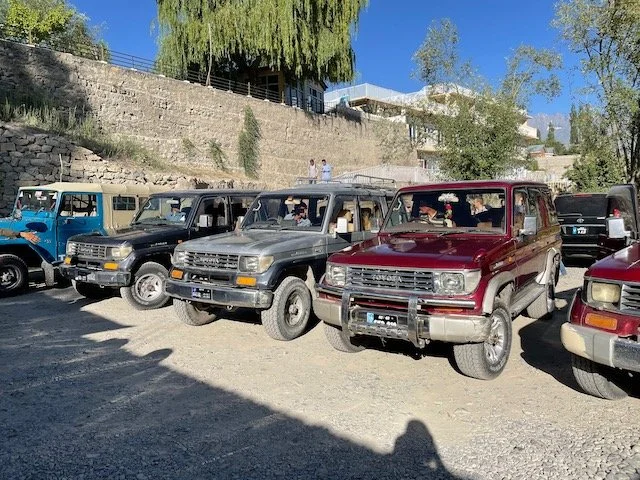
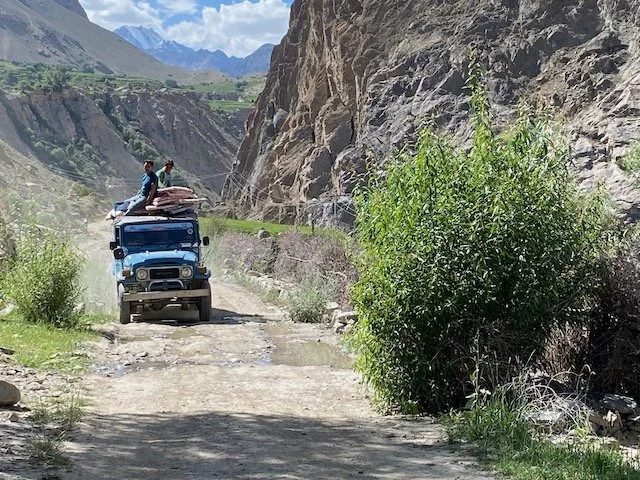
Driving from Skardu to Askole, we met up with our porters and mules, who loaded up the trekking gear along with chickens and two goats. Trekking up the Baltoro glacier with mules allowed us flexibility. The advantage of having mules transport our gear and supplies was that they never went on strike. We observed this had happened to other trekkers and climbers who relied only on porters.
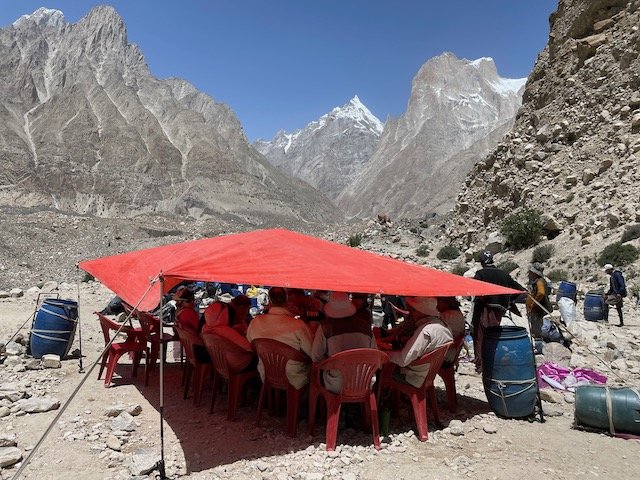
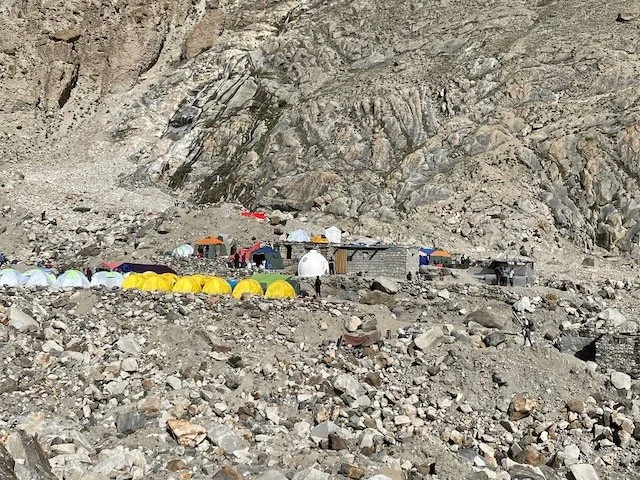
We were very blessed with the weather. The ‘mountain Gods’ were watching over us. The Balti people treated us like their guests and we were always in safe hands. The food cooked for us was some of the best we’d had previously on any trek. There were no tea houses and somewhat sketchy trails, so we camped in some unique places.
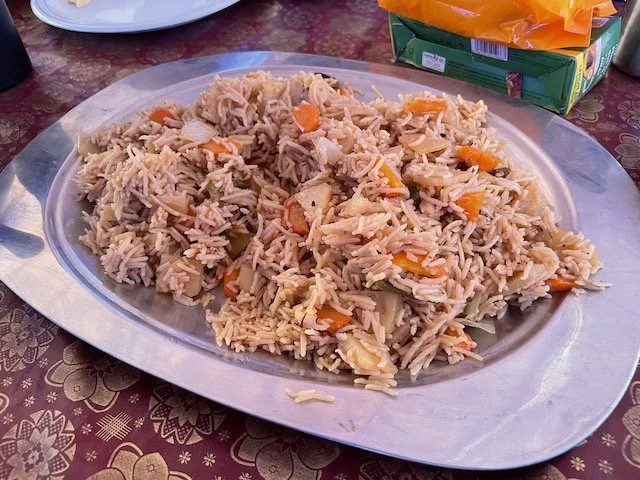
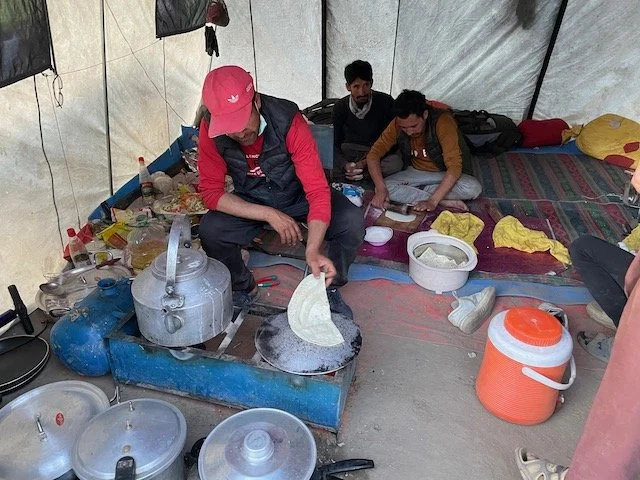
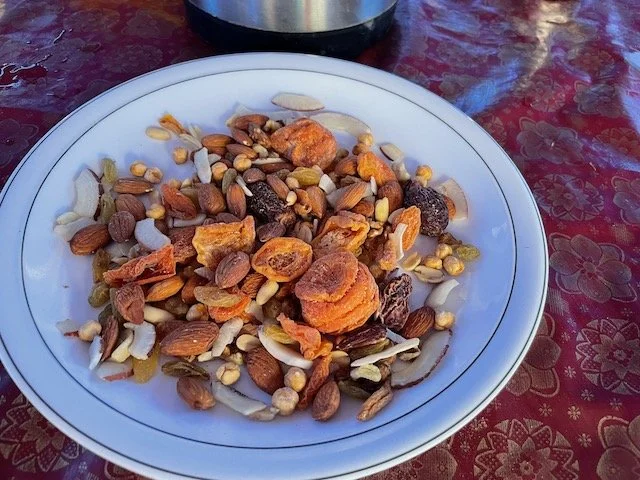
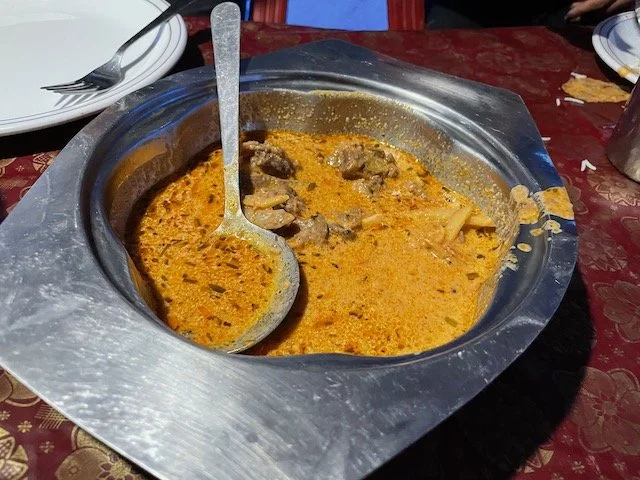
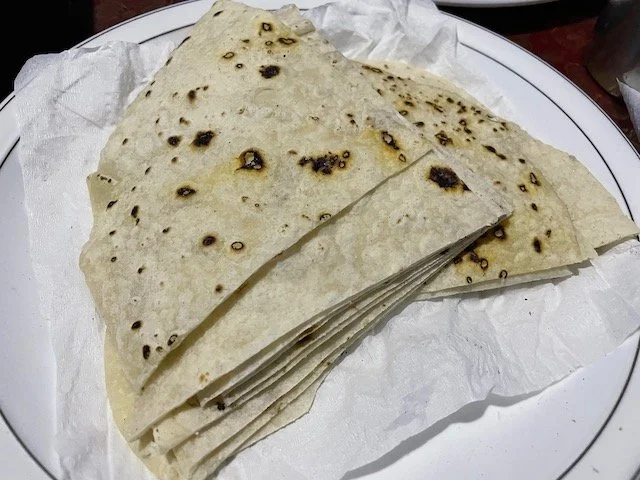
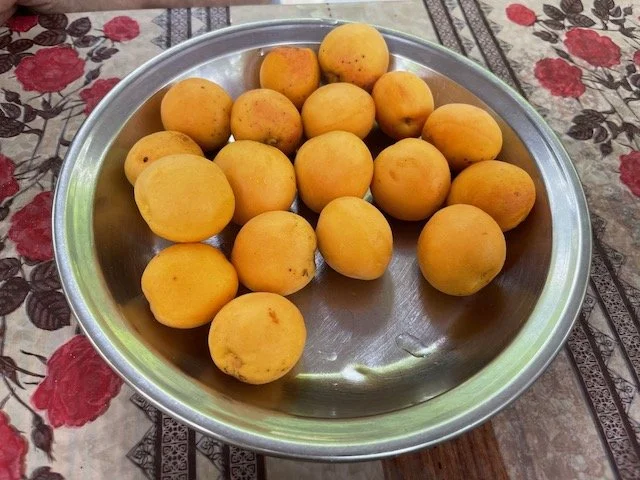
Lunch was often alfresco, out in the open, with chairs and a table for comfort. This was much to the envy of other trekkers passing by.
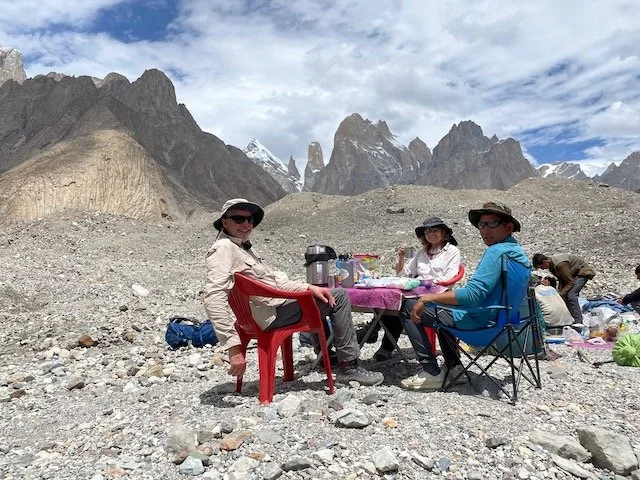
Lunch on the Baltoro Glacier!
Broad Peak Base Camp
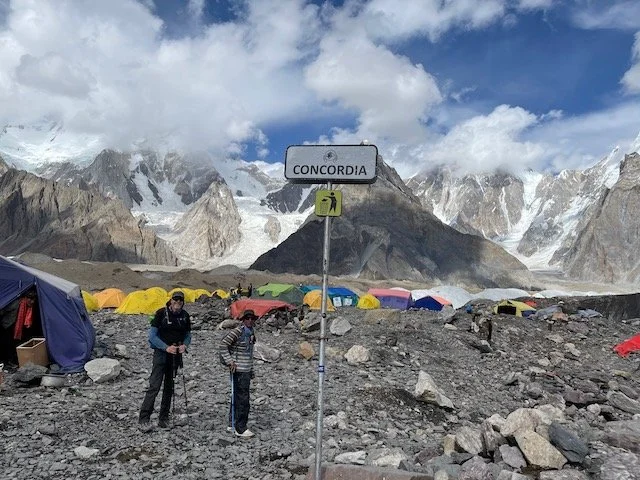
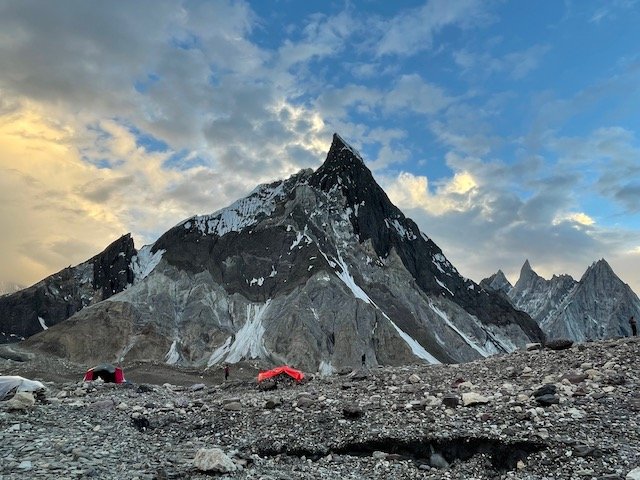
Heading up the infamous Baltoro glacier, we passed the magnificent Masherbrum and Trango Towers, sighting Broad Peak (8,051m) in the distance and Gasherbrum 4. Arriving at Concordia, the confluence of the Baltoro and Godwin-Austin glaciers exceed our expectations. We can see why it was dubbed ‘the throne room of the mountain gods’ by Galen Rowell, American photographer and mountaineer. We had astonishing 360 views of incredible mountains - K2, Broad Peak, Mitre Peak, Marble Peak and more.
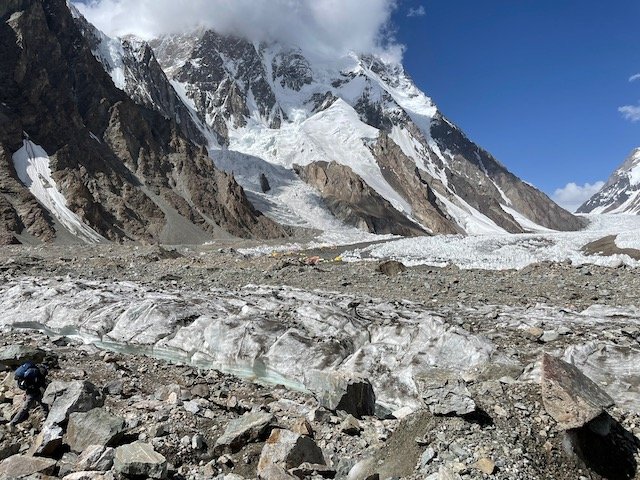
Broad Peak - the 12th highest mountain in the world - was just the beginning of the 8000ers for us in this region. We were in awe of its beauty, having stared at it for some four days heading up the Baltoro glacier. To get to base camp, after leaving Concordia we trekked up the Godwin-Austin glacier in the direction of K2. Base Camp was a long stretch situated high up on the right hand side of the glacier below Broad Peak.
Some climbers acclimatise by climbing Broad Peak before heading to K2 – the ‘double double’ as they say. But this year was brutal – warm days with a lot of rock fall and not much snow.
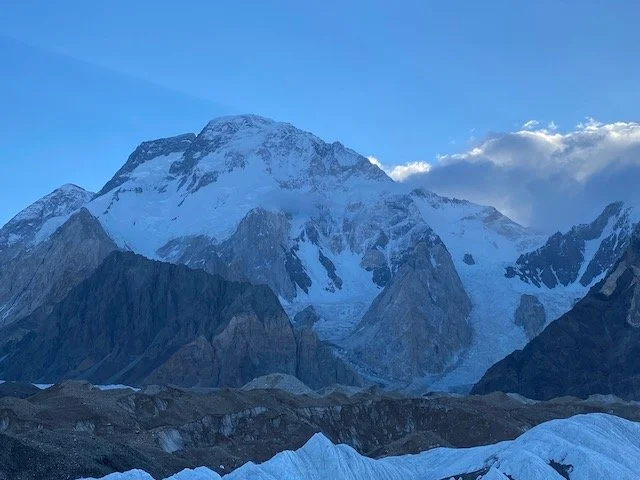
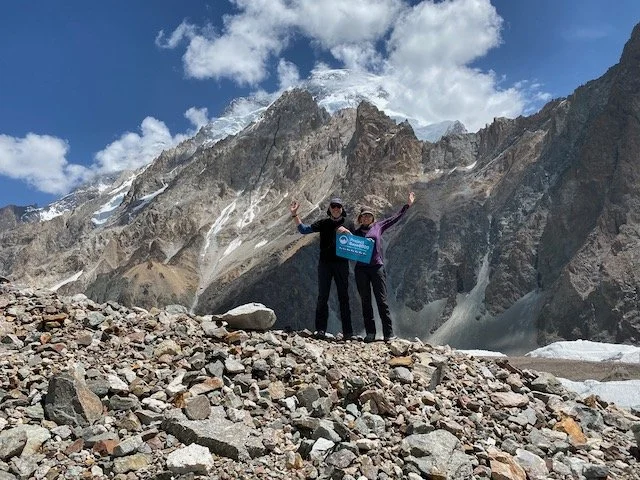
K2 Base Camp
Further up the glacier, past Broad Peak base camp, we arrived at the base camp for K2 (8,611m), the 2nd highest mountain in the world after Mt Everest (8,848m). The views are much better than Everest! Once you near Concordia and round the corner, ‘karbang’! There she is – K2 rising in the distance. You could spend days staring up at her sheer steep face. We did!!
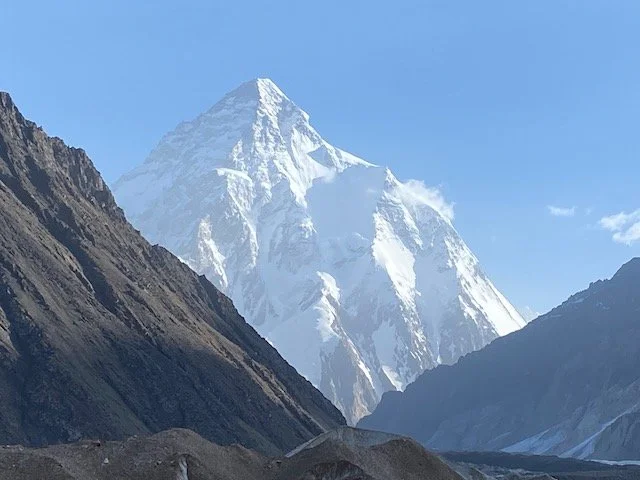
K2
Trekking up the Godwin Austin glacier to K2 base camp from Broad Peak, K2 is a very imposing and steep mountain. More impressive the closer you get.
Some of the climbers we encountered after successfully summiting remarked, ”it was like being on a back of a tiger while someone was shooting at you”. Translated, lots of rock fall!
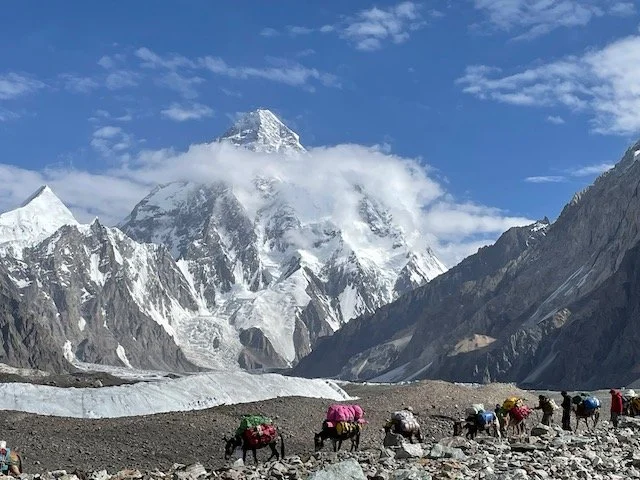
Mules carrying expedition gear in front of K2
You can understand why K2 gets its reputation and sadly many people lose their lives either summiting or descending. It takes someone exceptional to undertake a climb of this stature – more so than other 8000ers. Now we can see first-hand why.
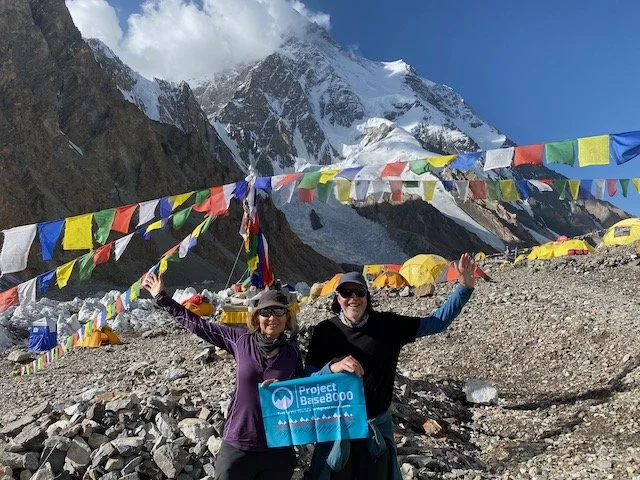
The first part of our trek up to Broad Peak and K2 had the group splitting off in all directions once we were back to Concordia. Half of our group headed up and over the Gondogoro La. In contrast, the others trekked back down the Baltoro, retracing their steps. It was sad to say goodbye after having been together for some ten days.
Gasherbrum’s I and II Base Camp
After saying our goodbyes and watching the group disappear into the distance, we were alone with our guide and two porters. Such was the silence; you could hear the glacier melting and moving around you.
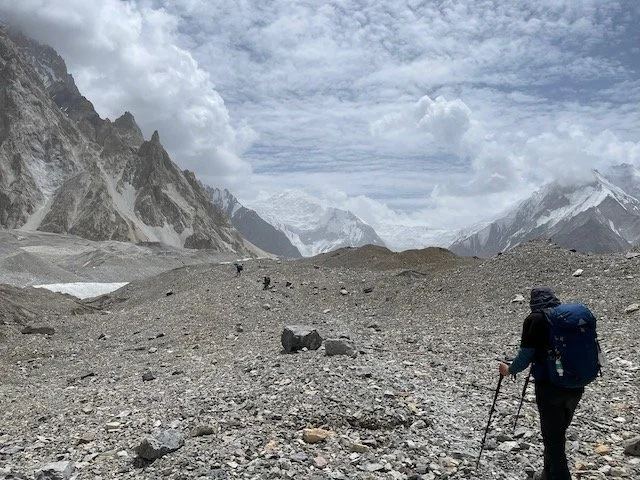
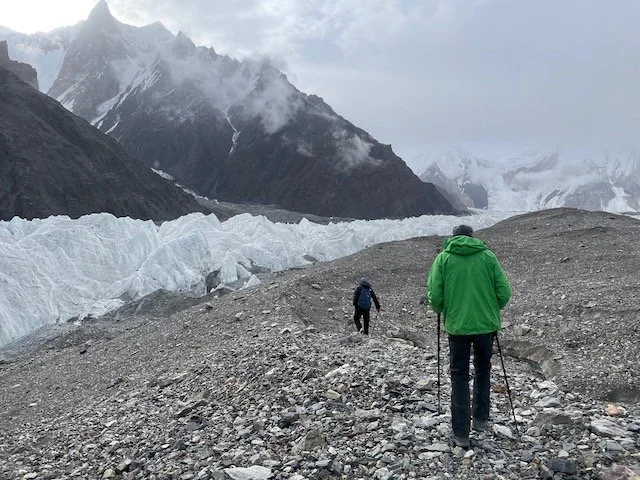
The plan from here was to trek further up the Baltoro and around to the Gasherbrum’s and the climbers’ base camp which is used for both peaks. Gasherbrum I (8,080m) and Gasherbrum II (8,035m) are the world’s 11th and 13th highest mountains respectively. It turned out to be tough going in the snow at altitude, plus picking our way through the glacier.
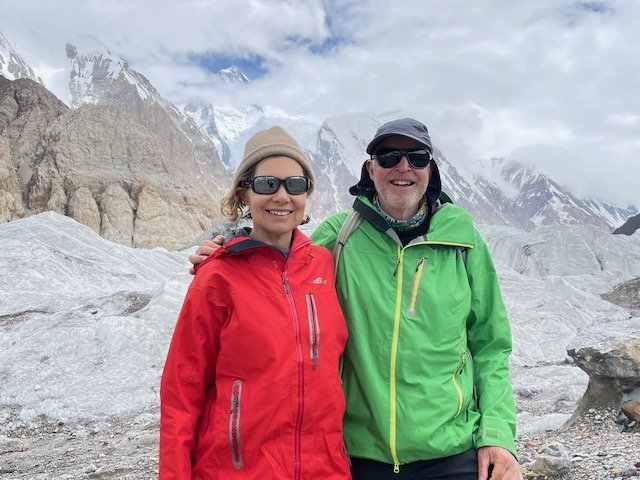
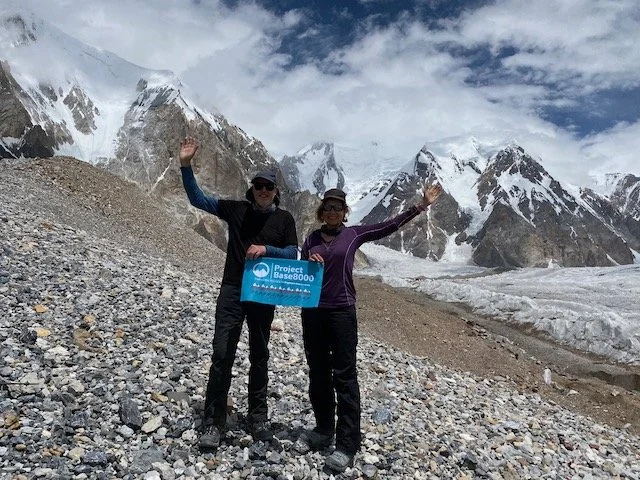
But we weren’t to be disappointed. There were still some climbers at base camp. After lunch, we retraced our steps back to our campsite and back to Concordia. Summoning up all our strength, the next day, we prepared for our trek back down the Baltoro to Askole.
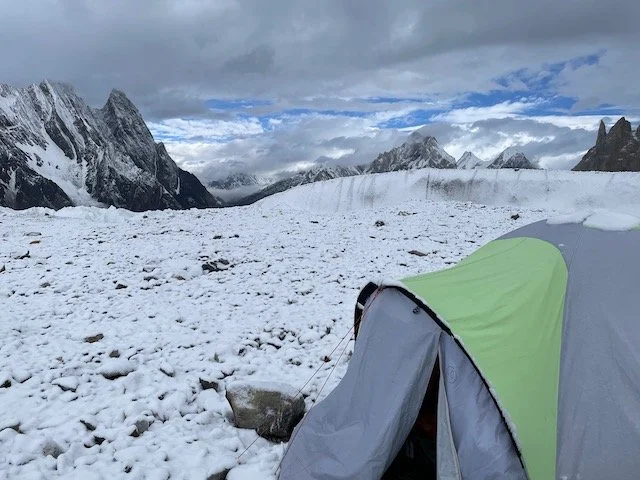
Waking up to snow
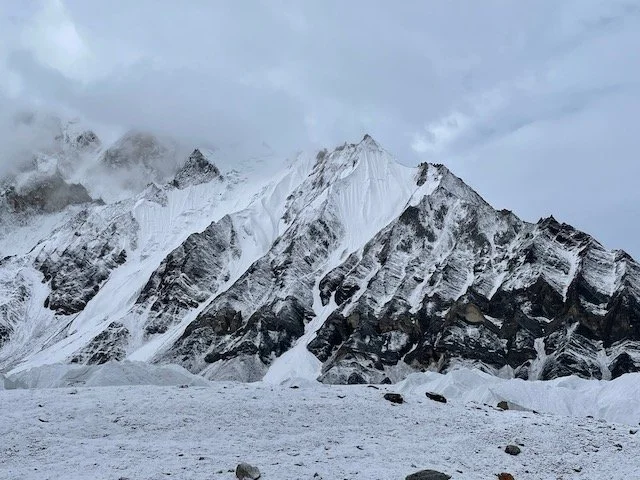
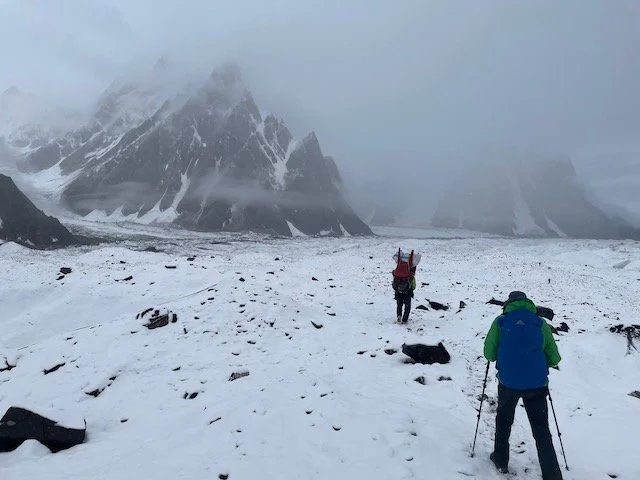
Encountering heavy snow, we found the Baltoro glacier had changed quite a bit in the two or so weeks from when we trekked up. We navigated around newly opened crevasses and washed-out bridges. We managed to pick up our jeep earlier than expected, which was a welcome relief. After several washouts and another sketchy river crossing, this time in a basket, we finally reached Askole and back to Skardu.
Trevor crossing a river in a wooden basket!
Nanga Parbat Base Camp
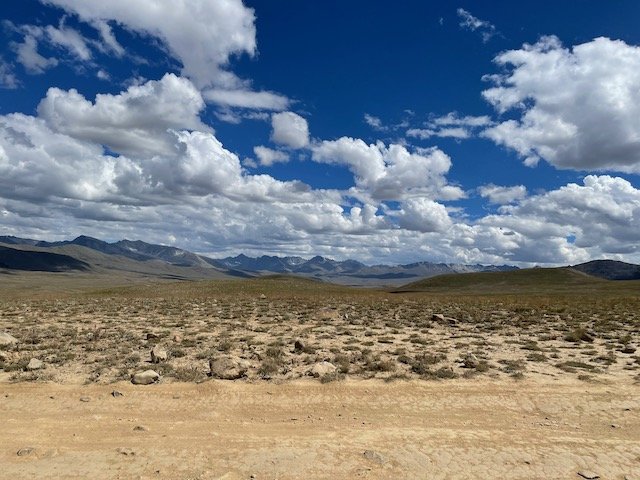
After some four days stuck in Skardu due to a religious festival, we finally managed to find a jeep and a driver. We drove to Tarashing via the high plains of Deosai National Park, which reminded us of the Tibetan Plateau.
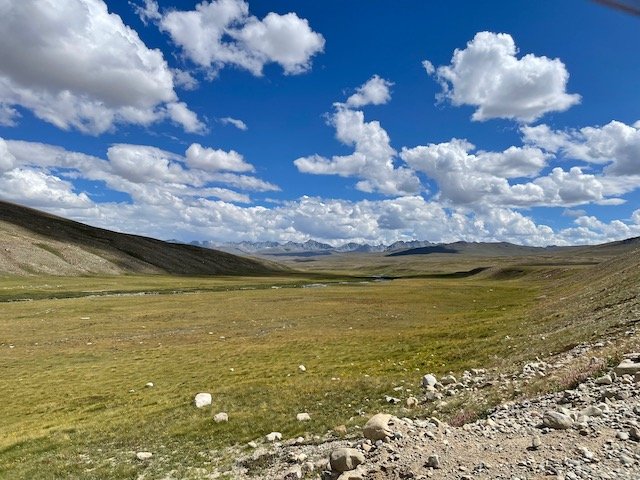
Arriving in Tarashing, we had a good view of Nanga Parbat – the 9th highest mountain in the world at 8,126m. After the previous few days, we were spoilt again beyond our imagination. Being this close up to Nanga Parbat was a sight to behold.
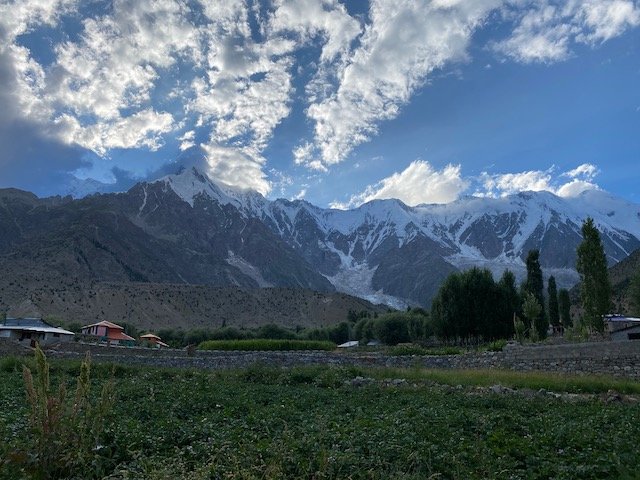
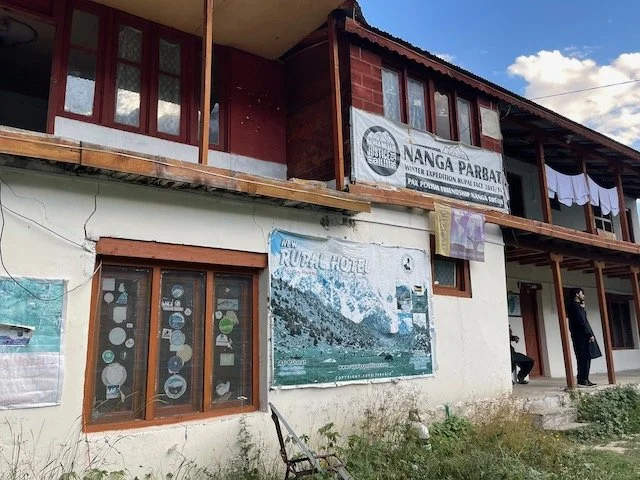
There are 3 base camps used for climbing Nanga Parbat – Rakhiot, Diamir and Herrligkoffer. We had chosen to trek to Herrligkoffer base camp (3,100m), which is also called Rupal Base Camp. Setting up camp under the Rupal face was a great way to complete the five base camps. The Rupal face of Nanga Parbat has the greatest vertical rise of 5,000m from base camp to the summit.
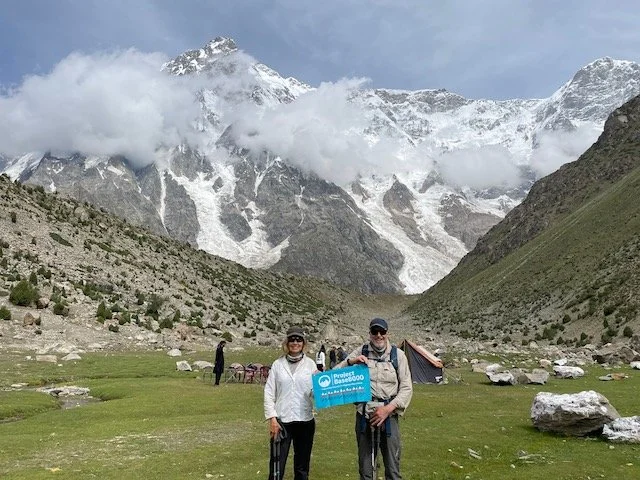
Nanga Parbat – Rupal Face – Herrligkoffer Base Camp
After a couple of days, we drove to Gilgit to catch our flight back to Islamabad.
Insh’allah – we will be back someday.
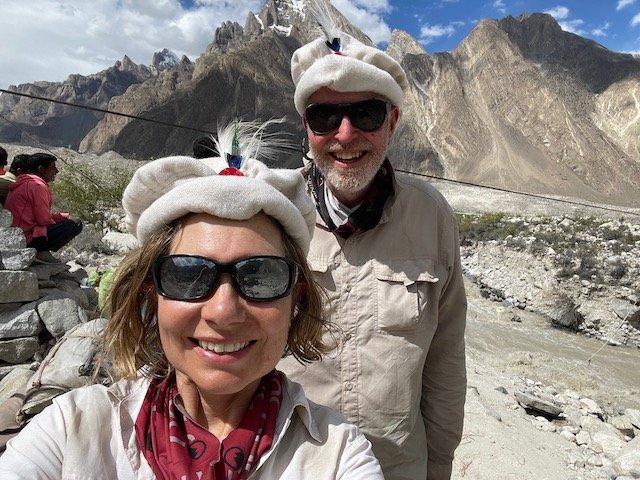
Traditional Chitrali caps given to us at the end of the trek
Insights
Caveat emptor – buyer beware! Do your research on the trekking company, as we met a few trekkers from other groups who were unhappy with their trekking companies, unlike us. For this trek, we chose The Mountain Company for the main trek up the Baltoro then continued with Jasmine Tours for the Nanga Parbat section. If you’re looking to do Nanga Parbat on it’s own, The Mountain Company now offer a Nanga Parbat Circuit Trek in addition to their K2 Base Camp Trek.
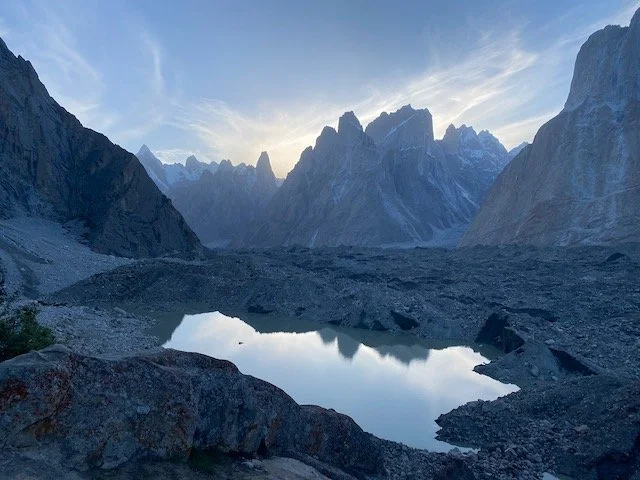
Uli Biaho and Trango Towers
The logistics were half the challenge – organising to do 5 x 8000er base camps was not easy. Find the right expedition company. Work out how to to do all five. Understand the visa process. Research the safety aspects and the right travel insurance (which we wrote a blogpost on here) and ultimately wait out the Covid-19 pandemic!
Pakistan Airlines are safe to fly with. We did two internal flights with no issues. One was on Pakistan National Day, with a nicely decorated cake served up with a flag.
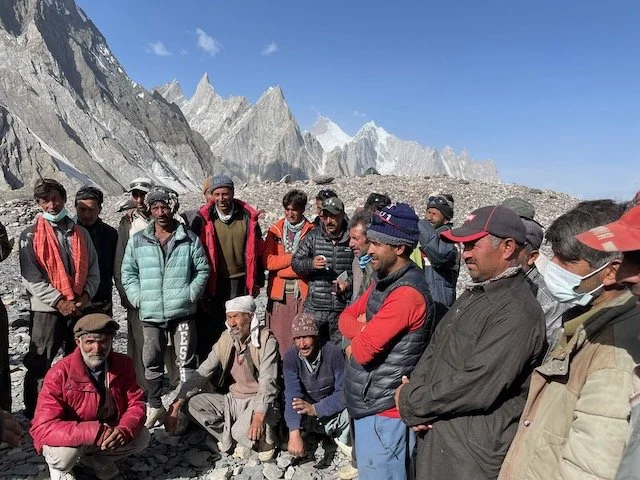
Our amazing trekking crew
If your boots fall apart on the glacier, having a cobbler with you on the trek is handy! So we were lucky to find that 2 of the trekking crew were indeed cobblers.
Make sure you have a heat management plan. It was hot and dusty for the first few days heading up the Baltoro. We were grateful for our long sleeved hiking shirts and wide-brimmed hats and/or legionnaires caps. For next-level heat relief we also took a small spray bottle of water to use on our faces when we were baking hot. It worked a treat – and some of our fellow trekkers were glad of it too! Don’t forget to take spare pair of sunglasses too – whether it’s the glare from the glacier rock and high altitude or in case it snows – you can’t afford to be without if you lose or break a pair.
Consider taking spare gear to donate to the trekking crew e.g. water bottles, sunglasses, headtorches etc
Ensure you have good sleeping mats as the glacier rock is hard! Check what your trekking company provides and decide whether you need to take anything additional such as an inflatable mat (which may also be needed for the cold as well).
Wear good quality, sturdy hiking boots which are in good condition before you start out. You need good support for ankles while trekking on the glacier and they’ll get pretty beaten up by the time you get back as well.
Be warned – calculating tips is a complete nightmare!! We spent many hours trying to (a) ascertain exactly how many crew we were supposed to be paying for then (b) ensuring they were paid an appropriate amount. The expectation was that we also take into account how far they walked and how many loads they carried, but this just became too complicated. Some porters also had to be paid early in the trek, as they were not needed higher up.
If you happen to drive from Skardu to Gilgit on the way home, you’ll. be lucky to see the junction of where three mountain ranges intersect – Himalaya, Karakoram and Hindu Kush. This is past Jaglot and before you reach Gilgit.
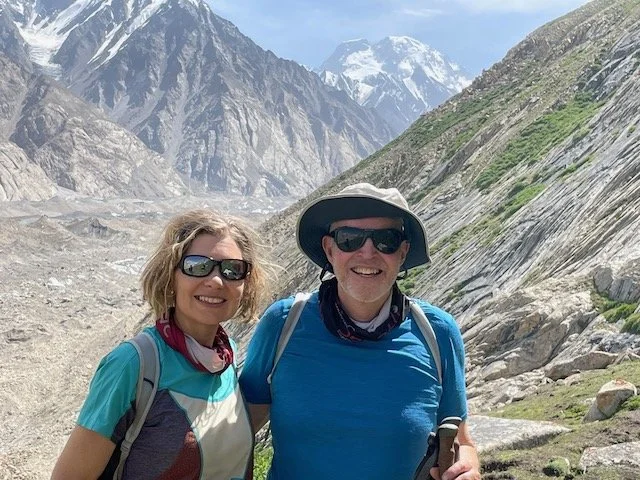
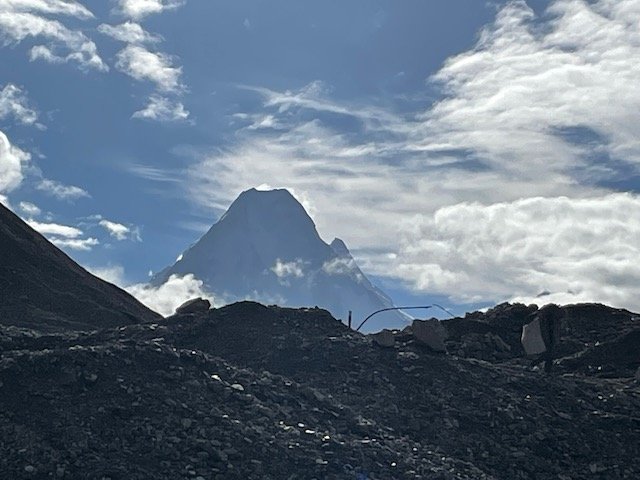
Onwards and upwards!
Trevor
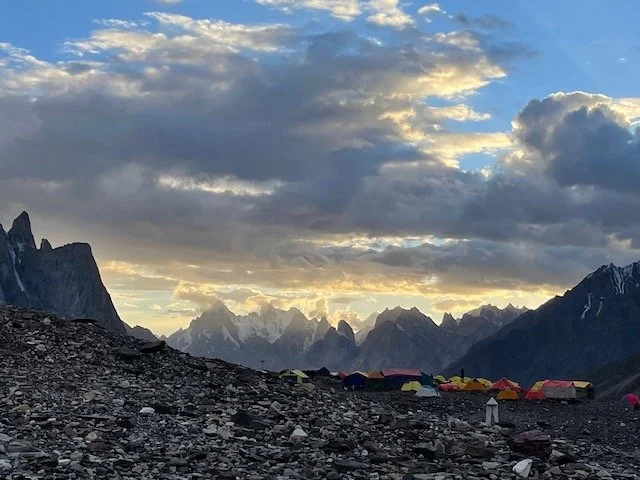
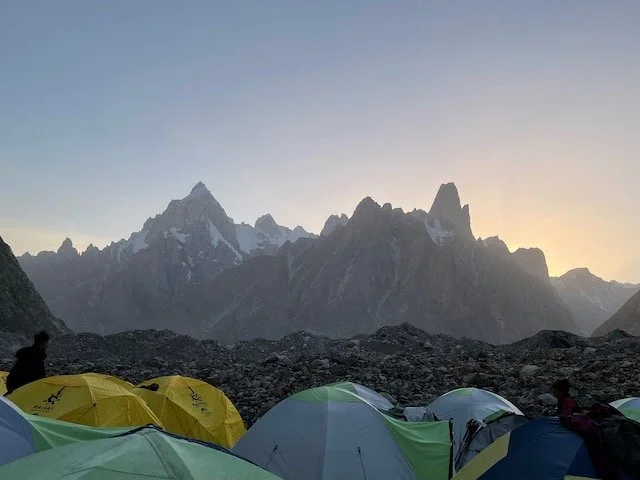
Sunset from Concordia
Watch Our Videos!
Part 1 - Trek up Baltoro to K2 and Broad Peak Base Camps
Part 2 - Trek Upper Baltoro to Gasherbrum I & II camps then back down Baltoro Glacier
Part 3 - Skardu - Deosai Plan - Nanga Parbat - Gilgit