Manaslu Base Camp Trek
Rain, rain, rain – well, it is monsoon season after all! The Manaslu Base Camp Trek (also known as the Manaslu Circuit Trek) was an adventure in many ways.
In this post:
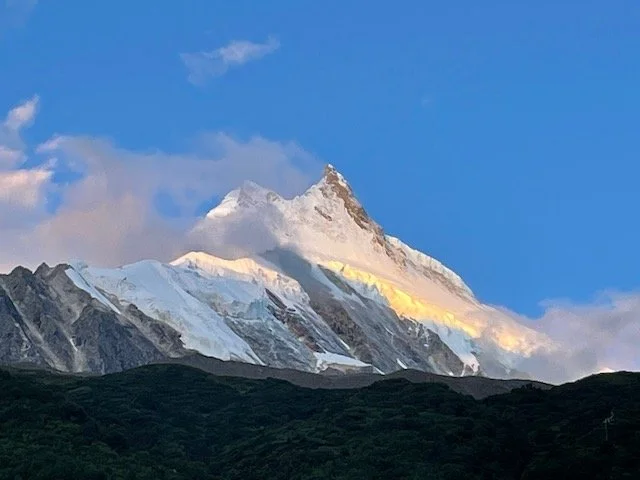
View of Manaslu (8,163m) from Samagaon
Introduction
‘This was the hardest trek we’ve done!’ Well, I do have a habit of saying this after every base camp we have completed as part of our Project Base8000. All thirteen so far to be exact!
There were some long days, ‘half marathons’ to be precise. Rain, new landslides and slippery conditions – along with pesky leeches. You know the the ones. They cling onto boots, packs, clothing – the blood sucking ones!
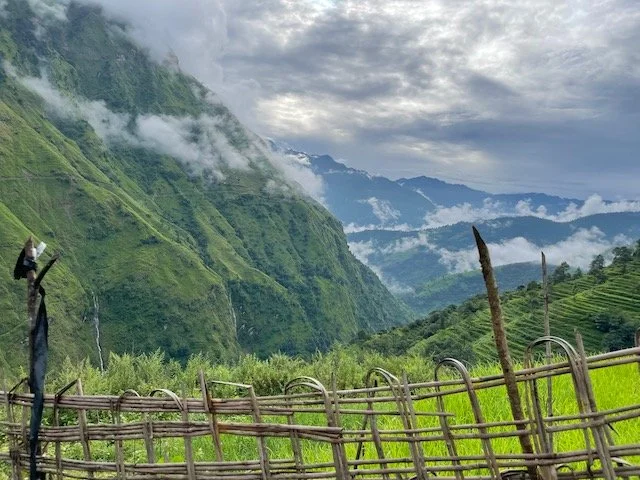
Fields of crops on the Manaslu Base Camp Trek
To cap it all off, a 1,300m ascent in one day from Samagoan to Manaslu Base Camp (4,881m). Then back down again a few days later crossing raging rivers that weren’t there when we trekked up – and with suspected fractured ribs (more on that later). Phew!
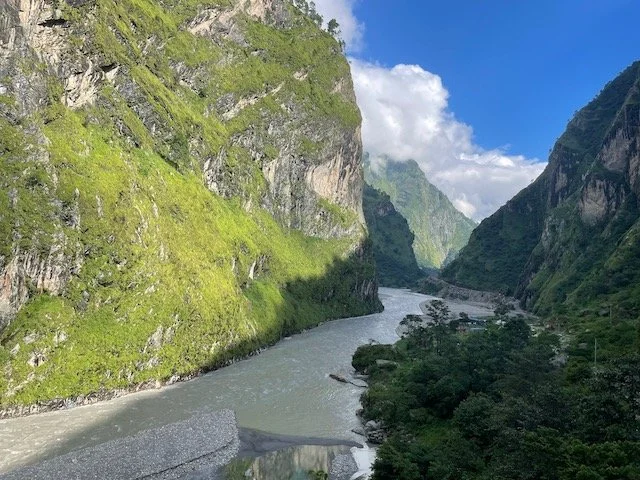
Trekking through deep gorges
Along with the challenges, spectacular views of deep gorges and beautiful villages were had. Plus, all the friendly villagers that greeted us with big smiles along with inquisitive school children added to the experience of the trek.
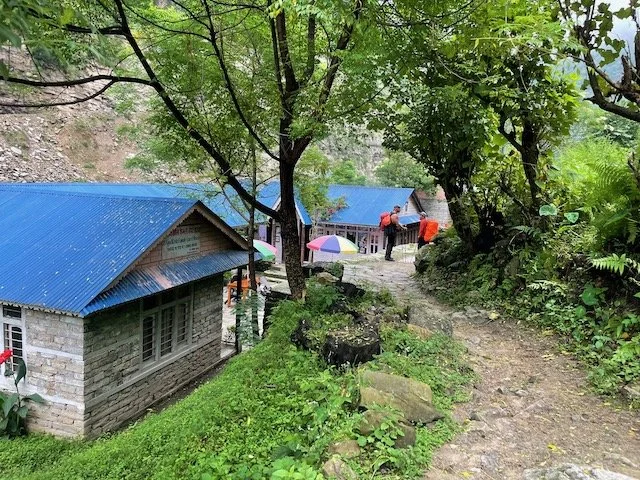
Teahouses en route
A lot of new tea houses are being built in this region, which will eventually attract more tourists.
Trekking to Base Camp
Our goal was to join up with a climbing expedition and experience life at base camp. This meant trekking in climbing season, which is earlier than the standard trekking season and is more rainy. We teamed up again with Climbalaya, the expedition company we’d used for the Cho Oyu Advance Base Camp Trek in Tibet, China.
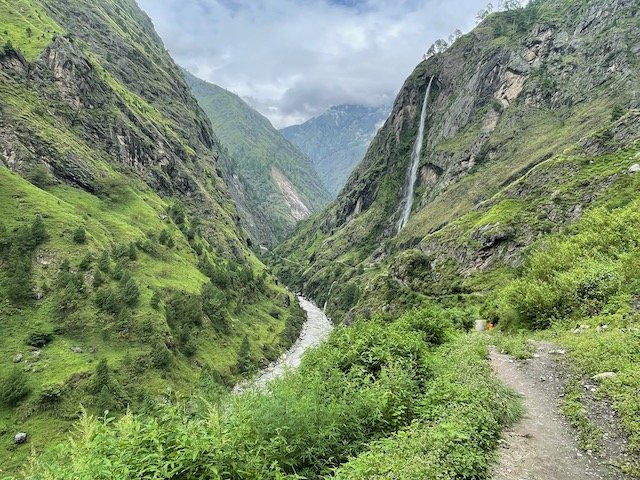
So much greenery!
Our trek took us on the Manaslu Circuit trail, with a detour from Samagaon up to base camp for a few days. While most climbers trek in, some choose to helicopter from Kathmandu to Samagaon (3,530m). Acclimatising for a couple of days, they then head up to Manaslu base camp where they base themselves for the launch to the summit of Manaslu (8,163m), 8th highest mountain in the world.
Due to landslides, we drove to Barpak (950m) and trekked in from there. This involved some challenging ascents and descents right from the start. We were accompanied by a Polish mountain climber nicknamed ‘animal’ – not by nature but his physical ability! After a few days trekking we joined up with an Argentinean lady who, unbeknown to us at the time, was on the same permit as our expedition company.
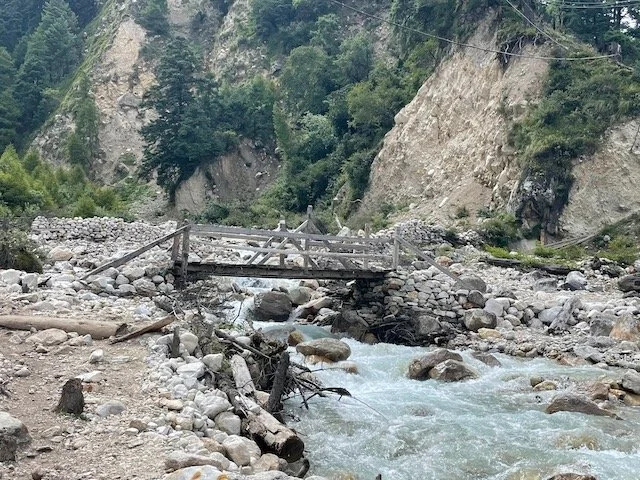
One of the many river crossings
Coming across a fresh landslide just out of Khorlabheshi, our Polish climber friend decided to cross first and test out how bad it was. When he yelled out ‘all good’, we trekkers followed suit – and fast!
As I stated before, days were long, humid and rainy. After all, this was the monsoon season so everything was green with lots of waterfalls and very high rivers which had also washed out some bridges.
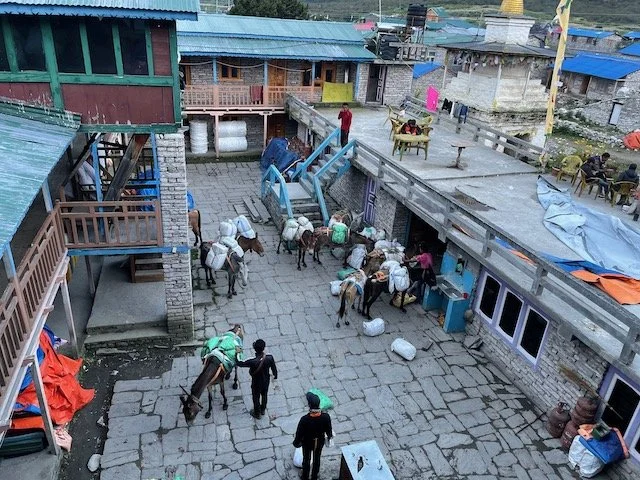
Mules being loaded up at Samagaon before heading up to base camp
Samagaon
Samagoan is known as the ‘Namche Bazaar’ of the area, albeit with less infrastructure but changing quickly. It’s also the base for helicopters to drop off expedition loads and then transport them up to base camp by mules or porters.
While trekking in, I happened to run into a guy near my old home town of Perth in Western Australia. He was here filming a Swedish climber and documenting her expedition – small world!
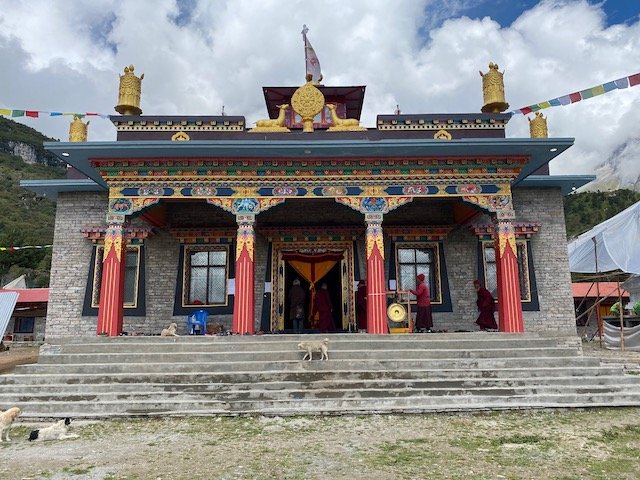
The new monastery at Samagaon
Samagoan is also the home of a couple of lovely monasteries (“gompas“). The old one, around a 10 minute walk from the village, is where we joined climbers for our first puja/blessing with the local Lama. The new one is being built close by and is much bigger. We were lucky to witness a ceremony being held there which involved lots of crashing cymbals and loud horns.
Manaslu Base Camp
The benefit of trekking in rather than the helicopter option was acclimatisation. So by the time we reached Samagaon we were ready for the trek up to base camp. Half way up there is a small ‘tea house’. It’s only there during climbing season so made for a pleasant break on what turned out to be one of the warmest days.
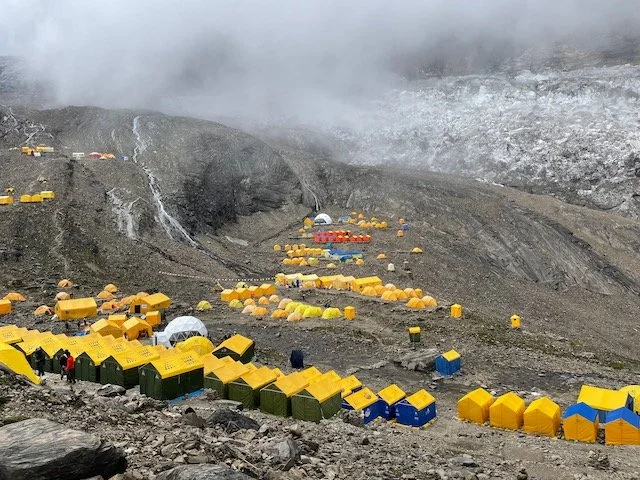
Tent city at Manaslu Base Camp
Reaching base camp, we were taken aback by ‘tent city’! Some 400 climbers along with sherpas and support staff spread out around a ridge – well over 1,000 people all up. The campsite of our expedition company (Climbalaya) was small compared to others, so represented a relatively tiny footprint from an environmental point of view.
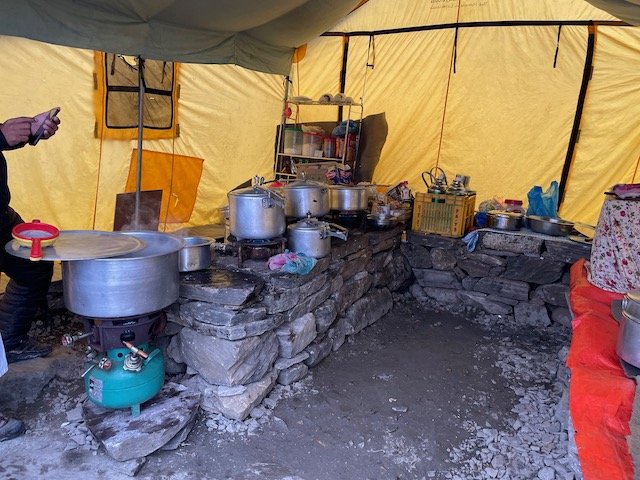
The expedition kitchen tent at Manaslu Base Camp
We were pleased to be reacquainted with climbers from our expedition to Cho Oyu back in 2019, along with Sherpa climbers who we’d been with on other expeditions. We also got to meet and hang out with more climbers from many different nationalities.
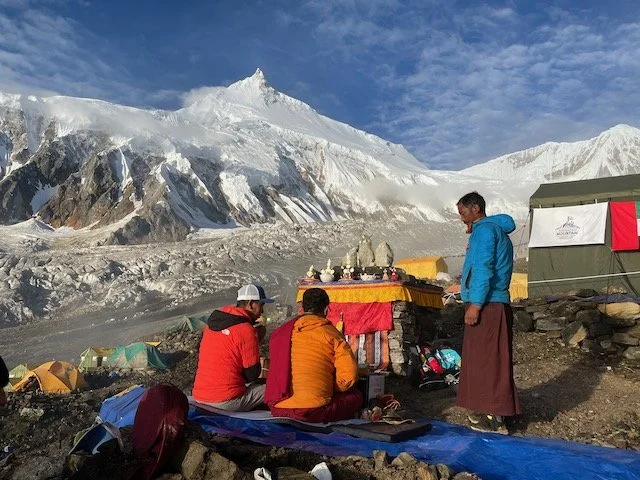
The Puja Ceremony
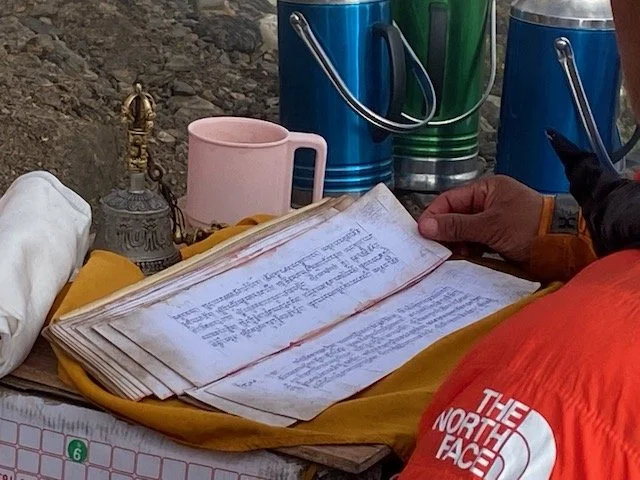
Tibetan prayers at the puja
After spending 3 enjoyable nights up at base camp, it was time to leave. But not before our expedition team held their Puja ceremony to seek safe passage on the mountain. The Puja is always held on an auspicious day in the Buddhist calendar. It is a very special occasion with offerings and lots of singing and dancing at the end.
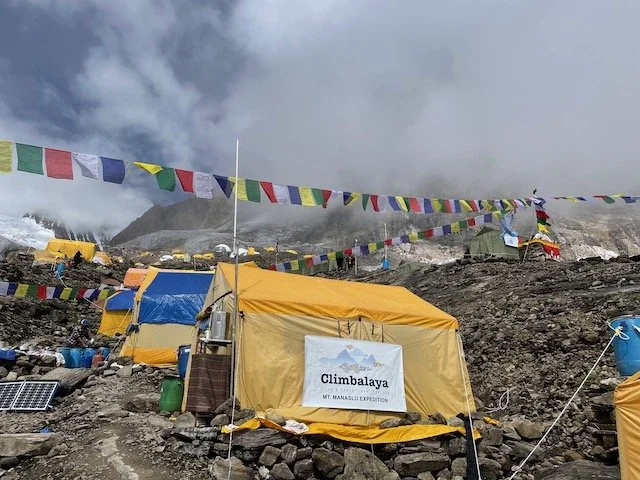
Dining tent and prayer flags after the puja
Helicopter Evac
Unfortunately, a few days before we’d reached base camp, I slipped and landed on a very sharp rock. Shouting out a few expletives and experiencing a fair bit of pain, I dumped my backpack. I had a sore back and did not know the extent of my injuries. Managed by pain killers and carrying very little weight on my back, I soldiered on trekking.
Having reached base camp, with very little sleep due to the pain, I discussed my plight with our expedition leader and our guide.
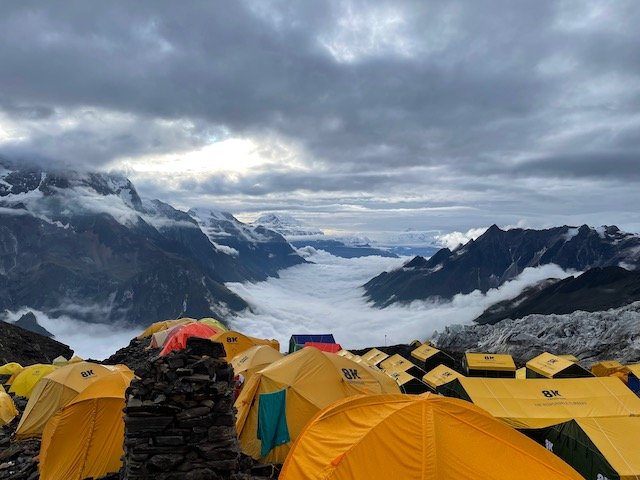
Clouds in the valley below base camp
Concerned about any serious injuries I may have incurred as a result of my fall, a decision was made to reach out to our insurance company. This involved obtaining permission for a helicopter evacuation back to Kathmandu and being admitted to the hospital clinic to be checked out.
Due to inclement weather, the helicopter company chose not to fly up to base camp despite others successfully managing to. So, I would need to descend back down to Samagaon and be evacuated from there. The torrential rain somewhat ‘dampened’ my pain for the 4 1/2 hours descent. The next day I managed to fly out.
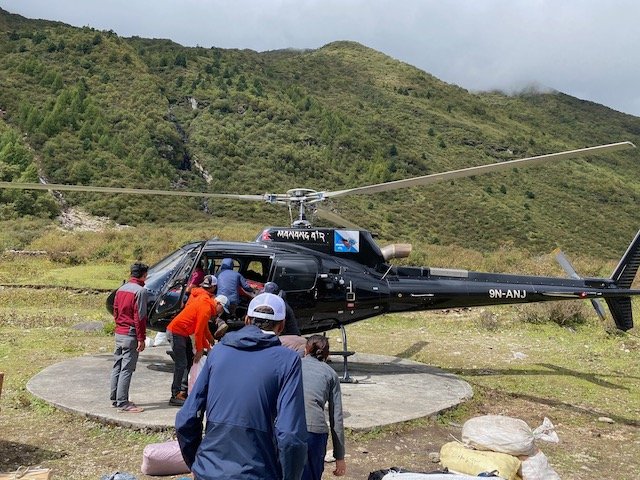
Helicopter evacuation
Footnote: My parter Emma continued on with the trek, crossing Larkya La Pass (5,135m), rejoining me in Kathmandu. I was medically diagnosed with fractured ribs but cleared to fly back home. Our friend the Polish climber along with his guide, successfully summited Manaslu under trying conditions. So did the Argentinian climber.
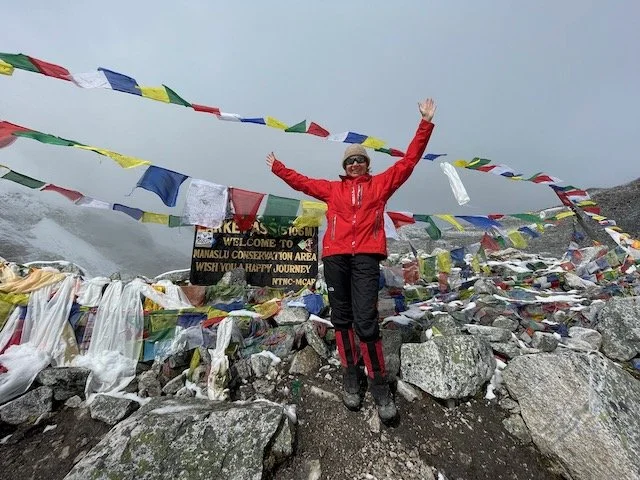
Emma on Larkya La Pass
Watch Our Video!
Insights
The total distance of the Manaslu Circuit is around 177km (110mi). Add on around 10km return for the trek up to Manaslu base camp. There is also an optional side trip to the Tsum Valley.
The usual starting point for trekkers doing the Manaslu Circuit is Macha Khola, rather than Barpak where we had started from.
Best time to do the trek is in Spring (April/May) or Autumn (October/November). We had chosen to go earlier (in late August/September) to coincide with the normal climbing season. At other times of the year there is likely to be nobody at base camp or lots of snow.
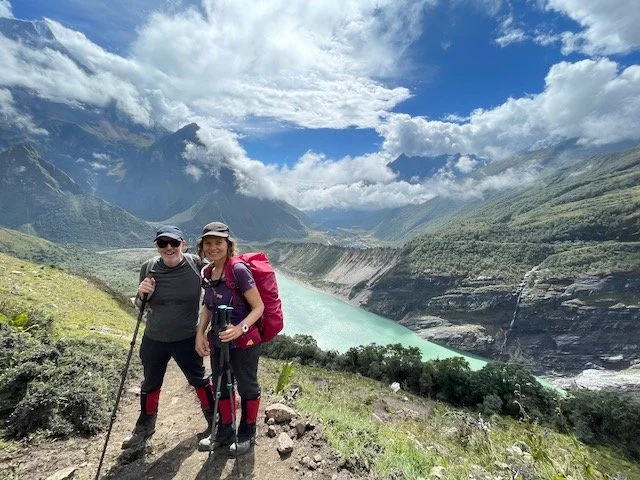
En route to base camp – the view back down to the lake and Samagaon
Manaslu Base Camp is not usually included on standard Manaslu Circuit trek itineraries. If anything it may be an optional side trip from Samagaon. If you’re not there in climbing season then rather than trekking all the way to an empty base camp, you could consider trekking just half way up. Here you can see a beautiful lake and the view back down to Samagaon and the surrounding mountains.
Climbers have 3 options to reach base camp. One option is to trek in from the direction we came, which allows for more gentle acclimatisation but takes longer. Most climbers choose the faster option of trekking in from the opposite direction. This involves a more rapid acclimatisation and a very steep climb to the Larkya La pass. Even faster, but expensive, is to helicopter from Kathmandu to Samagaon then acclimatise before trekking to base camp.
There are many tea houses and lodges on route. No need to camp unless you plan to stay up at Manaslu base camp.
Onwards and upwards!
Trevor
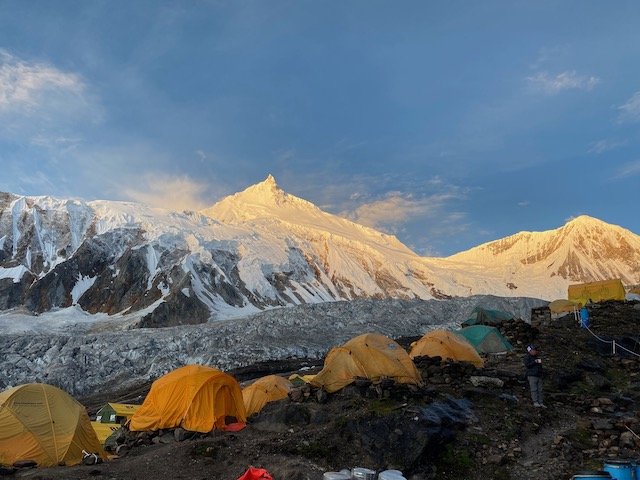
View of Manaslu from base camp