ANNAPURNA I
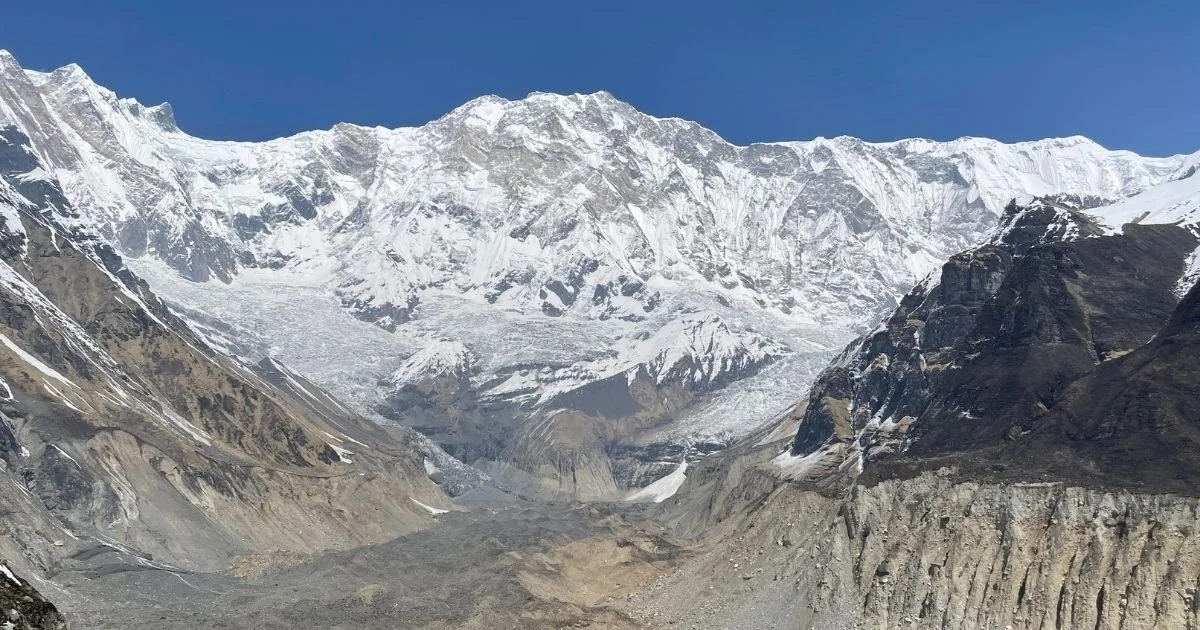
Annapurna I is the 10th highest mountain in the world at 8091m / 26545ft. It was the first of the 8000ers to be climbed and was first climbed in 1950 by a French expedition led by Maurice Herzog. It is one of three 8000ers which are located completely within Nepal (the others are Dhaulagiri and Manaslu)
The first Australian ascent of Annapurna I was in 2007 by Andrew Lock and the first New Zealand ascent was in 2016 by Chris Jensen Burke. (Source: Himalayan Database)
PROJECT BASE8000 EXPEDITION:
April 2023
ANNAPURNA I BASE CAMP
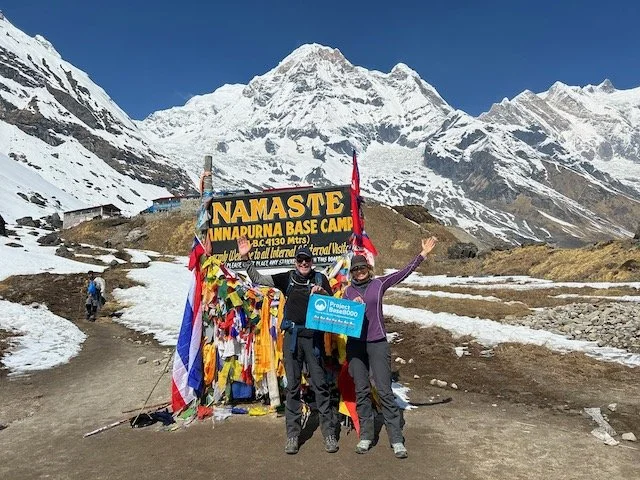
South Base Camp: Nepal – 4,130m / 13,550ft
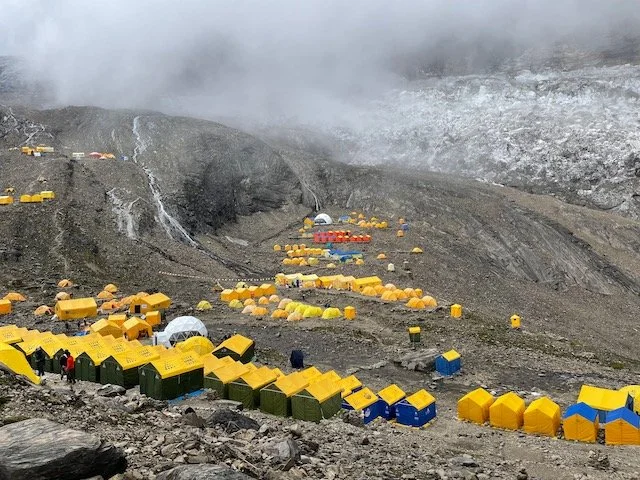
We trekked to the south base camp for Annapurna I, which is the most common route for trekkers. The north base camp, used by most climbing expeditions these days, is harder to get to and was not recommended for trekking at the time we went. Many climbers get a helicopter to this base camp instead. The trail may have improved since 2023.
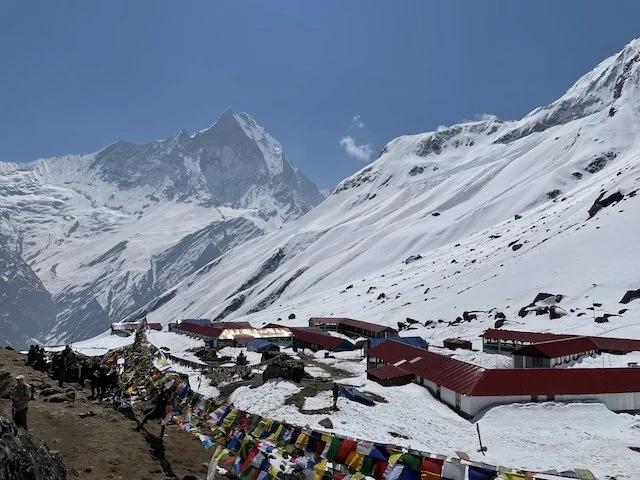
We also visited Machhapuchhare base camp along the way. This mountain, also known as ‘Fishtail’, is spectacular.
The trek involved staying at teahouses along the way, although an option is to take tents as the teahouses can get busy and may only offer shared rooms, especially at base camp.
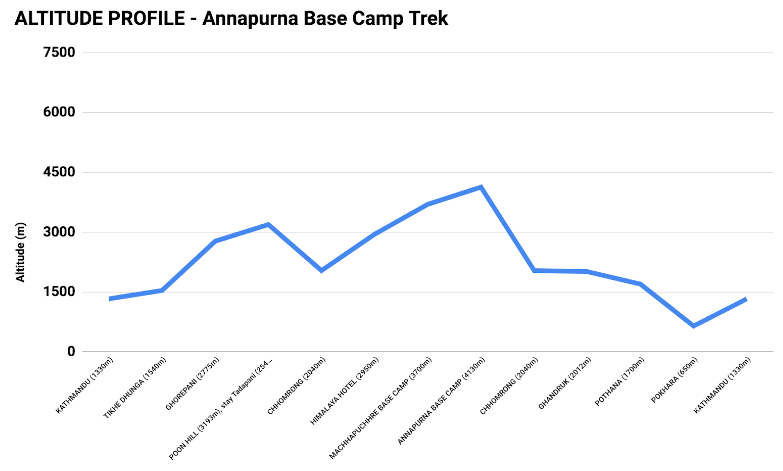
How to get there – there are various options for trekking to ABC, with different starting points of the trek which converge in the village of Chomrong where the single trail then leads up to ABC. Treks can also vary in the number of days. It’s important that sufficient acclimatisation is built in to your itinerary.
Our itinerary was 10 days: fly from Kathmandu to Pokhara, drive to Birethanti and trek from there via Poon Hill (for the magnificent sunrise view and also to help with acclimatisation). We then crossed over to Chomrong and up the narrow gorge to ABC. While our original itinerary was to trek to Ghandruk and Shyauli Bazaar we chose to end the trek in Jinnu and jeep back to Pokhara from there.
Number of days trekking – 10 days including the first and last day which was a combination of trek and fly/drive
Best time of year to trek – November/December for clearer weather and less crowds. Otherwise April/May. March is not recommended due to higher risk of avalanches in the narrow valley.
ANNAPURNA BASE CAMP TREK - WATCH OUR VIDEO
ANNAPURNA BASE CAMP TREK - READ OUR STORIES