Kanchenjunga Base Camp Trek – North and South
At 8,586m/28,169ft, Kanchenjunga is the world’s third highest mountain, located in far-eastern Nepal on the border with India. We trekked to both the North and South Base Camps. This is also known as the Kanchenjunga Circuit Trek.
In this post:
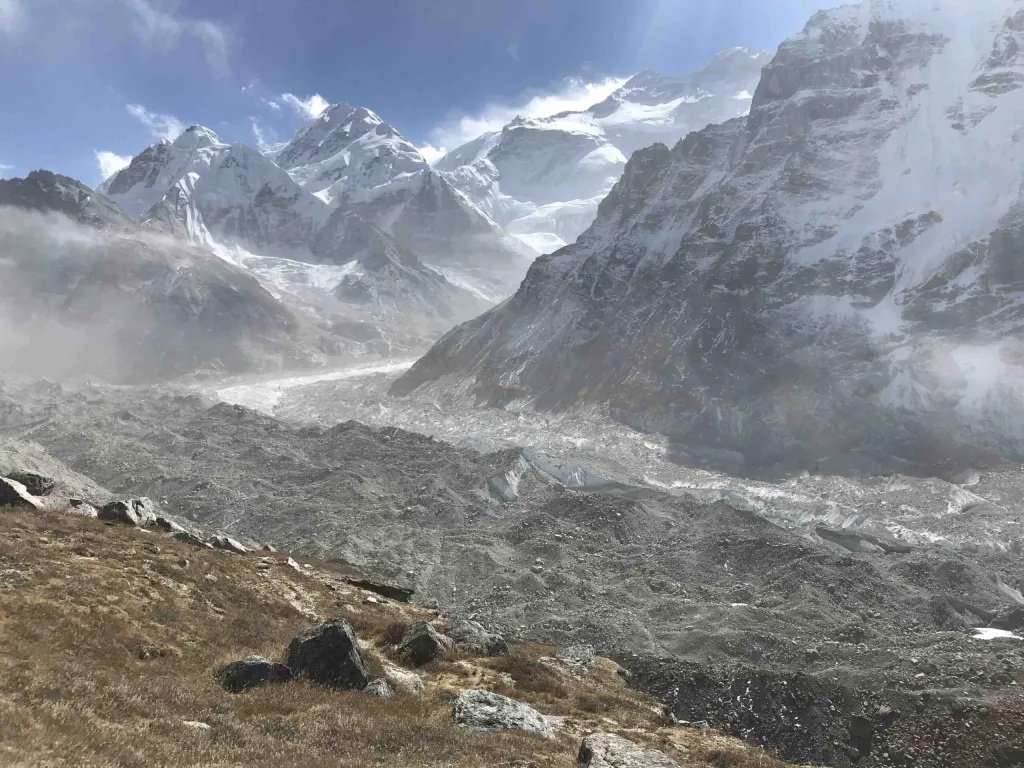
Glacier heading up to Kanchenjunga North Base Camp
Introduction
Blessed with perfect weather, this trek into the far eastern remote part of Nepal was truly an amazing adventure.
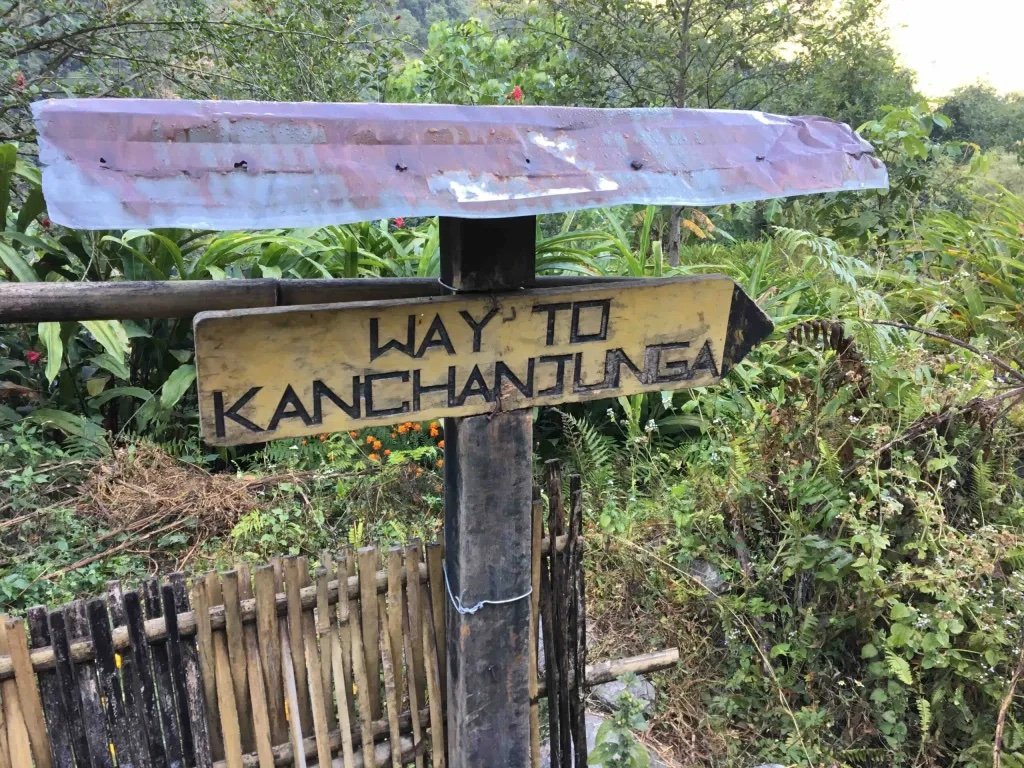
Signpost to Kanchenjunga
With great views of the mighty Kanchenjunga massif from both the North Base Camp (5,143m/16,873ft) and South Base Camp (Oktang – 4,752m/15,590-ft) – and hardly any other western trekkers in sight!
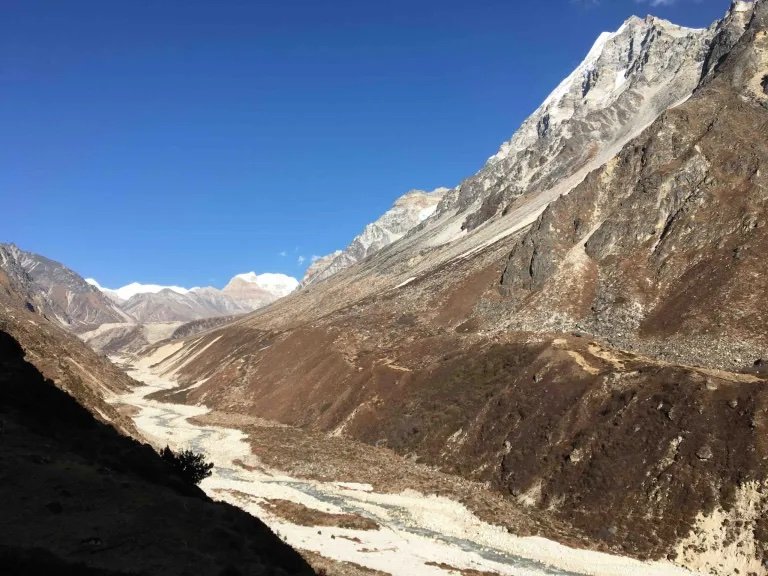
Valley to Kanchenjunga North Base Camp
We undertook a circular trek that went through the Kanchenjunga Conservation Area. Forests, alpine meadows and high altitude wetlands are home to snow leopards, red pandas, blue sheep and monkeys. While our group didn’t see any red pandas or snow leopards, we did see some blue sheep.
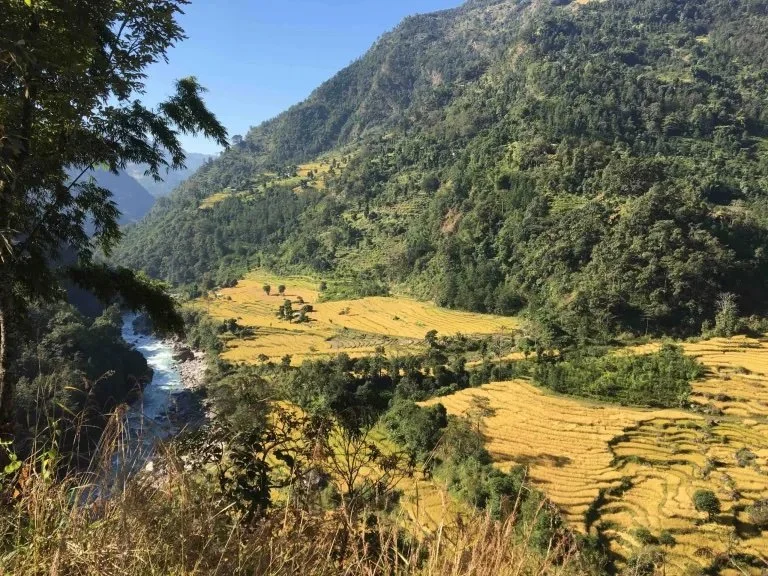
Trekking through lush countryside
Trek to Kanchenjunga North Base Camp
After a 45 minute flight from Kathmandu to a steamy and very hot Bhadrapur, we then drove for two days to reach Taplejung (1,441m/4,727ft) to commence our trek. From there, we trekked for a few more days up to Ghunsa (3,420m/11,220ft) through cardamom fields and forested areas.
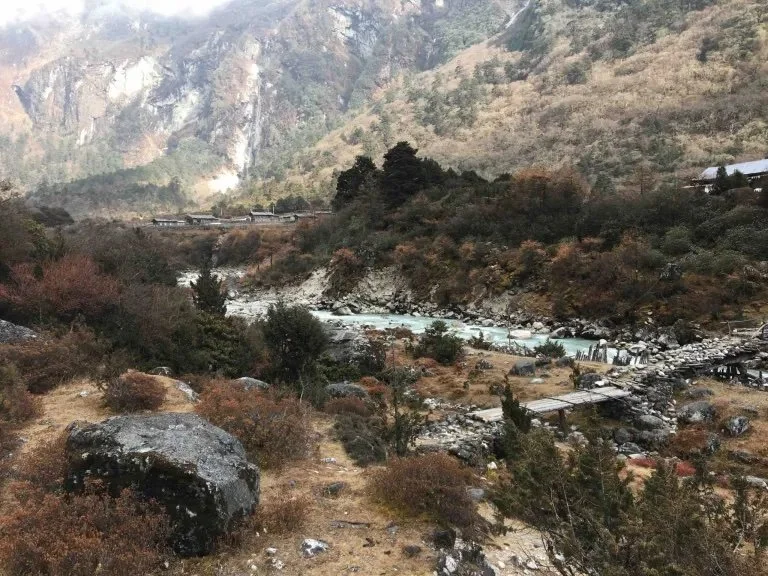
Ghunsa
Following a compulsory rest day in Ghunsa to acclimatise (which involved ascending a ridge of around 400m/1,312ft), we then trekked to Kangpachen (4,100m/13,451ft). This was another acclimatisation day, with a trek up to the stunning Jannu viewpoint at the head of the valley. Jannu stands at 7,710m/25,295ft – a truly awe-inspiring mountain in its own right.
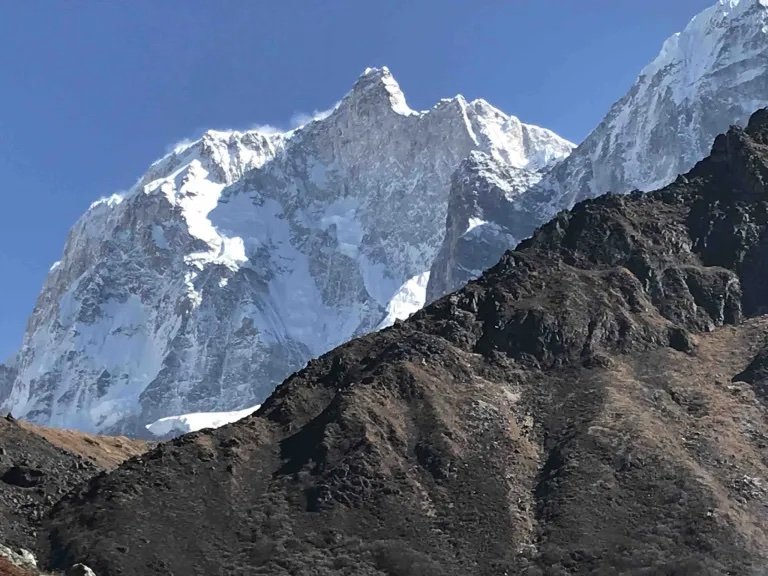
Stunning Jannu
Scrambling over rocks, dodging rock slides and a frozen river (note to self, don’t put ones boot into a dodgy crack in the ice!) was all in a day’s work to reach Kanchenjunga North Base Camp (5,143m/16,873ft).
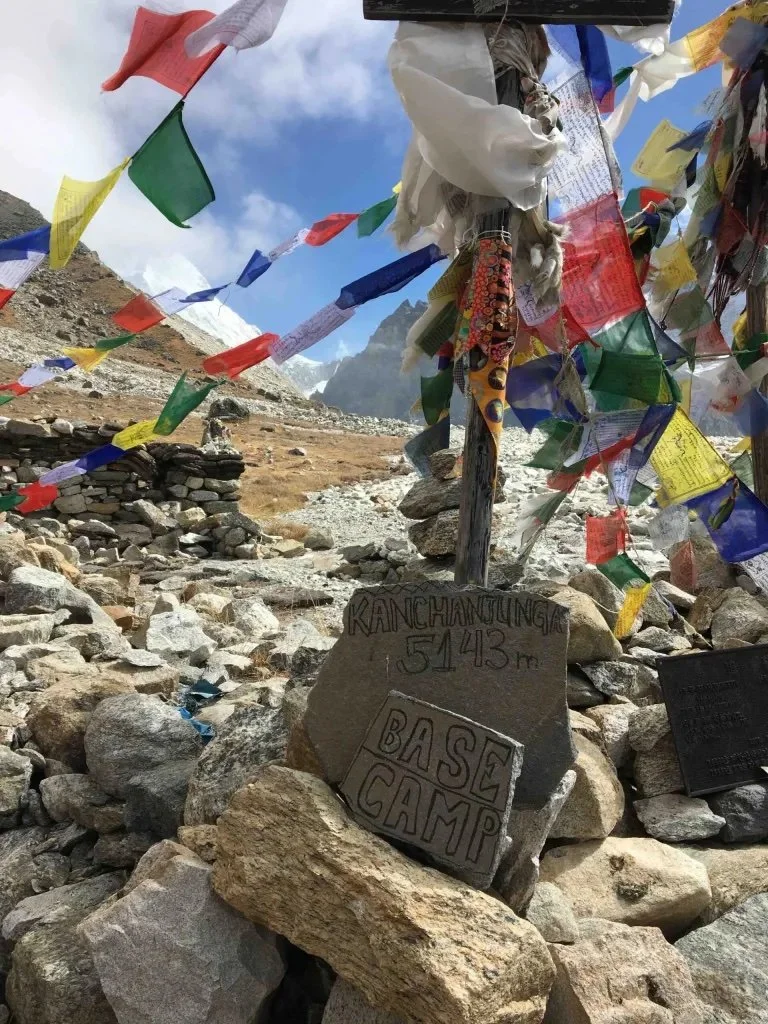
Kanchenjunga North Base Camp
Trek to Kanchenjunga South Base Camp
Dropping back down to Ghunsa, we then headed up to Selele camp (4,220m/13,845ft), over three passes, before dropping down to Ramche (4,100m/13,451ft).
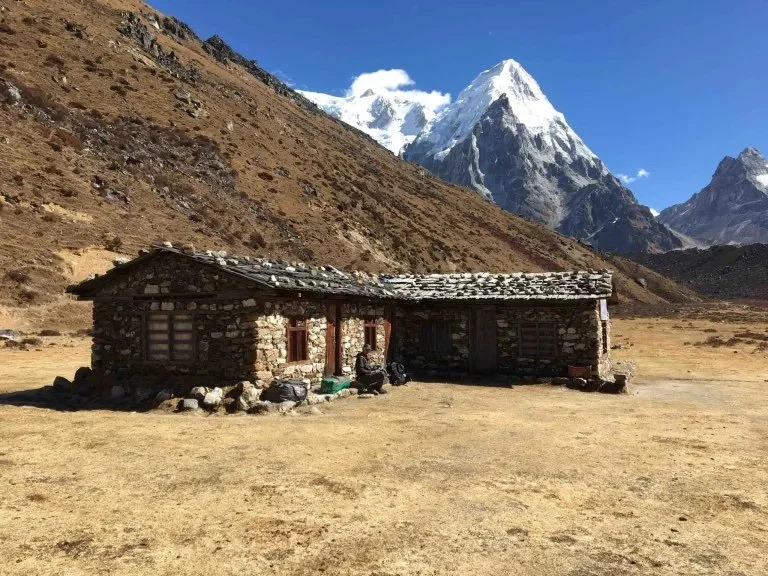
The ‘rustic’ teahouse at Ramche
From Ramche, we then proceeded for a short afternoon trek to Oktang (South Base Camp – 4,752m/15,590ft). For reference purposes, the official climbers base camp is situated further along the glacier – Yalung Base Camp (4,500m/14,764ft) which is very difficult to reach.
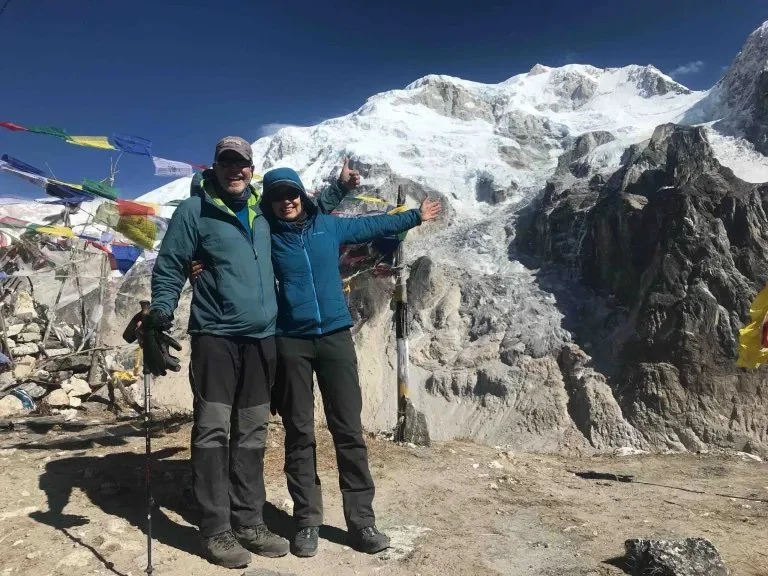
Kanchenjunga South Base Camp (Oktang)
After Ramche, we then descended for the next few days around 3,000m to reach the Happu Khola village and road head where we ended our trek – they don’t call it the Nepali flat for nothing!
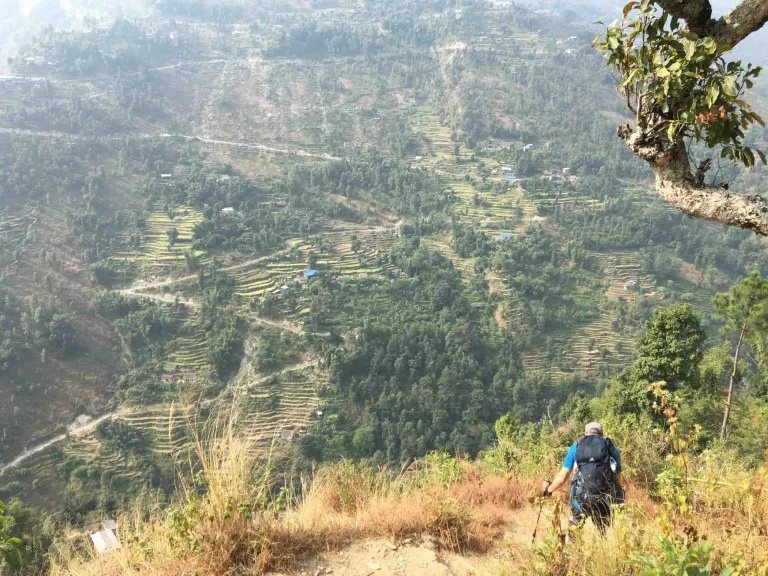
The big descent to Happu Khola
The Kanchenjunga trek itself was hard work but definitely rewarding. The variety of scenery, ecological zones and ethnic diversity was quite different to previous treks we have undertaken in Nepal.
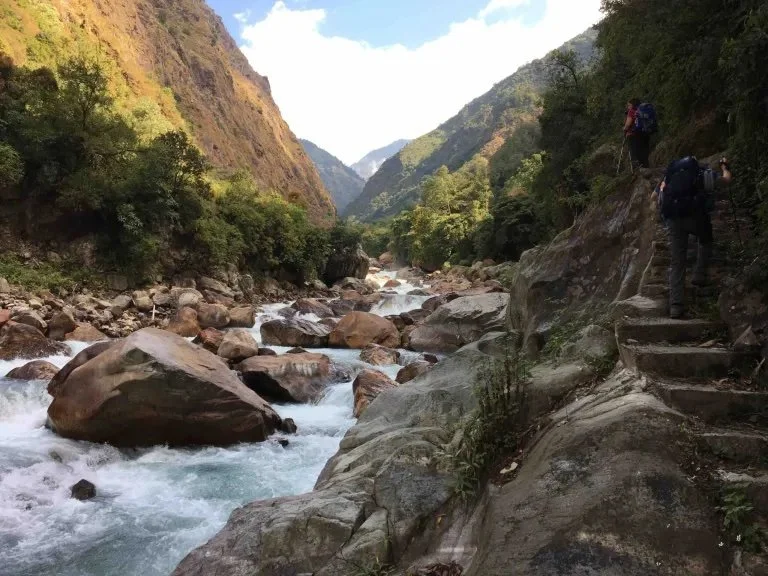
Autumn colours by the Ghunsa Khola river
On that note, next April we are planning to head back to Nepal to tackle Makalu Advanced Base Camp and cross the Sherpani Col down into the Khumbu. You can follow our project to trek to the base camps of the 14 highest mountains in the world – Project Base8000.
Onwards and upwards!
Trevor
Watch Our Video!
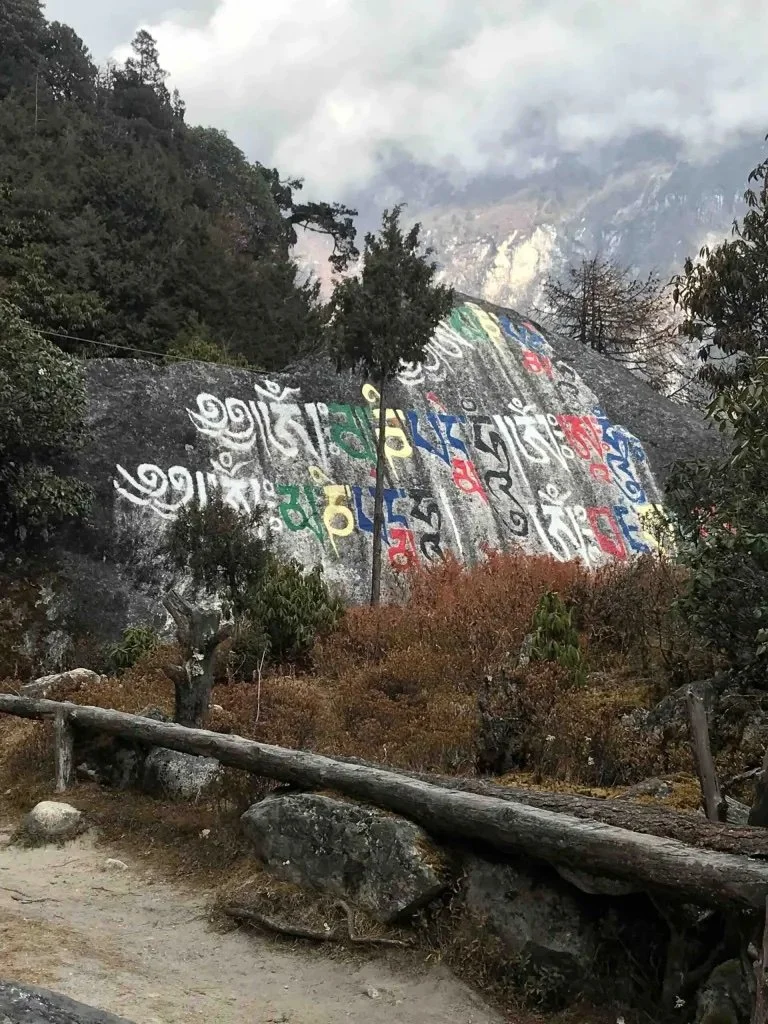
Mani wall
Insights
You can do this trek now using teahouse accommodation as an alternative to camping.
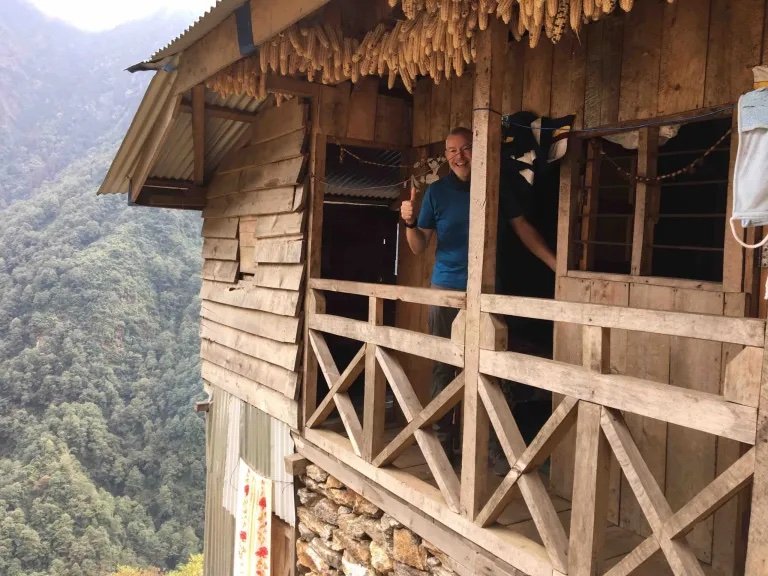
Teahouse at Amjilosa – note all the sweet corn hanging from the roof
There is no wi-fi in the region but we were surprised at the number of teahouses where we could charge our devices for free.
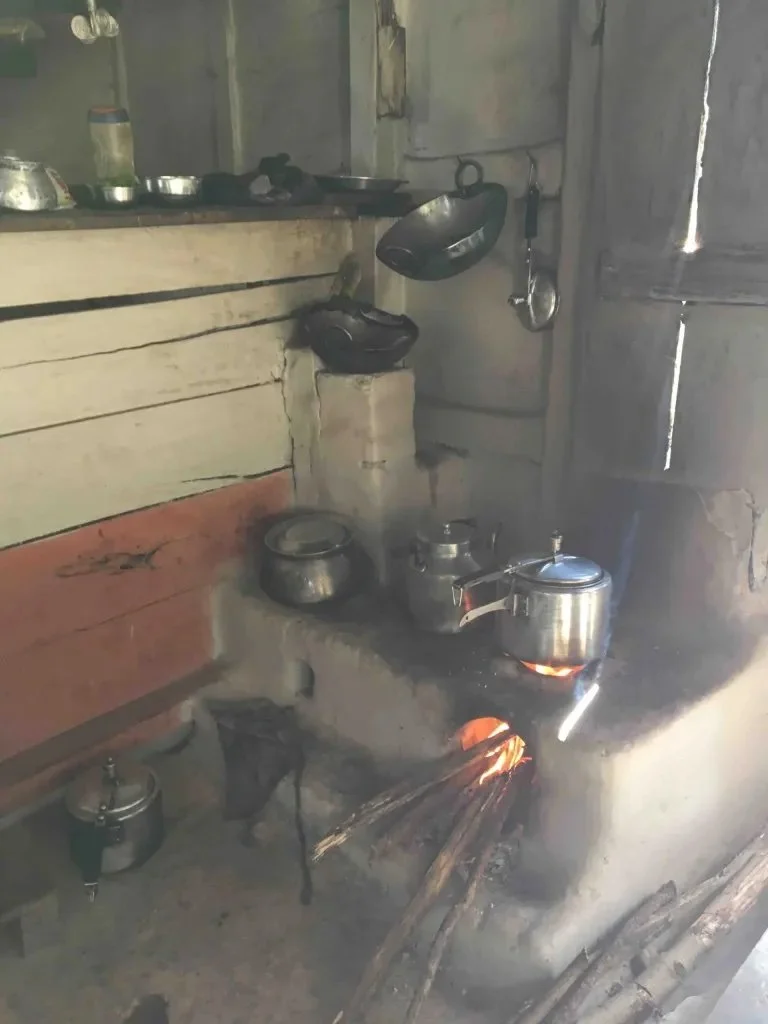
Basic teahouse cooking
The trek is rated as hard/strenuous, with lots of rock hopping involved. Not to mention the long jeep ride at either end of the trek!
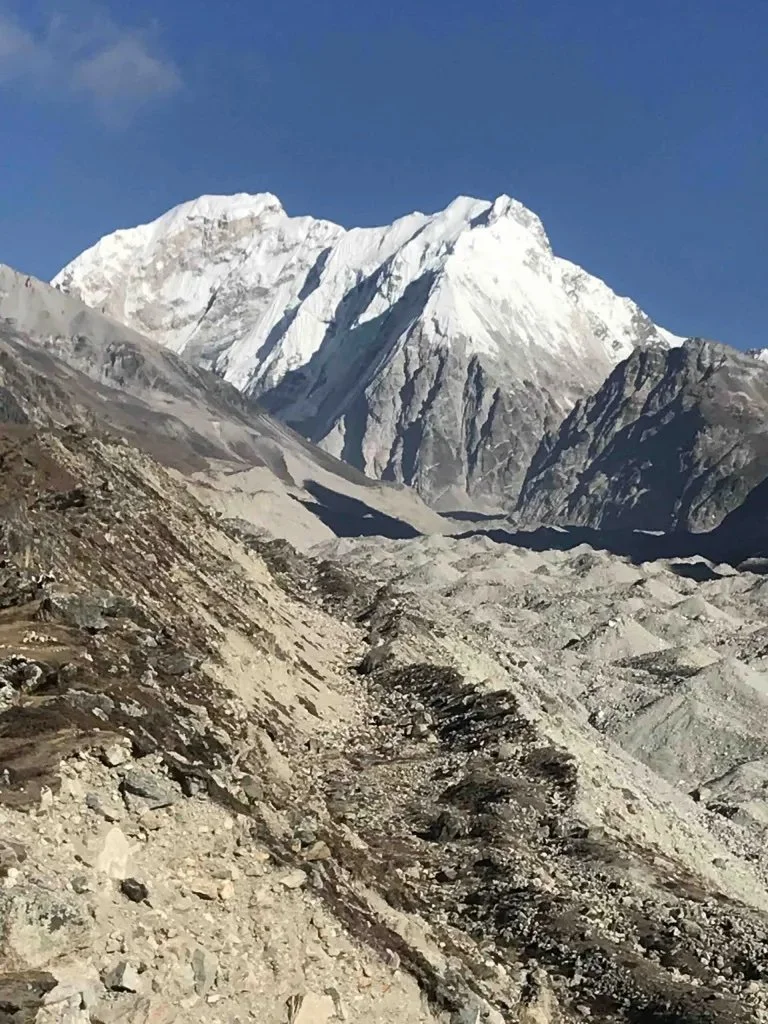
Rocky Trail to North Base Camp
Commence the trek from the North (as opposed from the South) to increase your chances of acclimatisation.
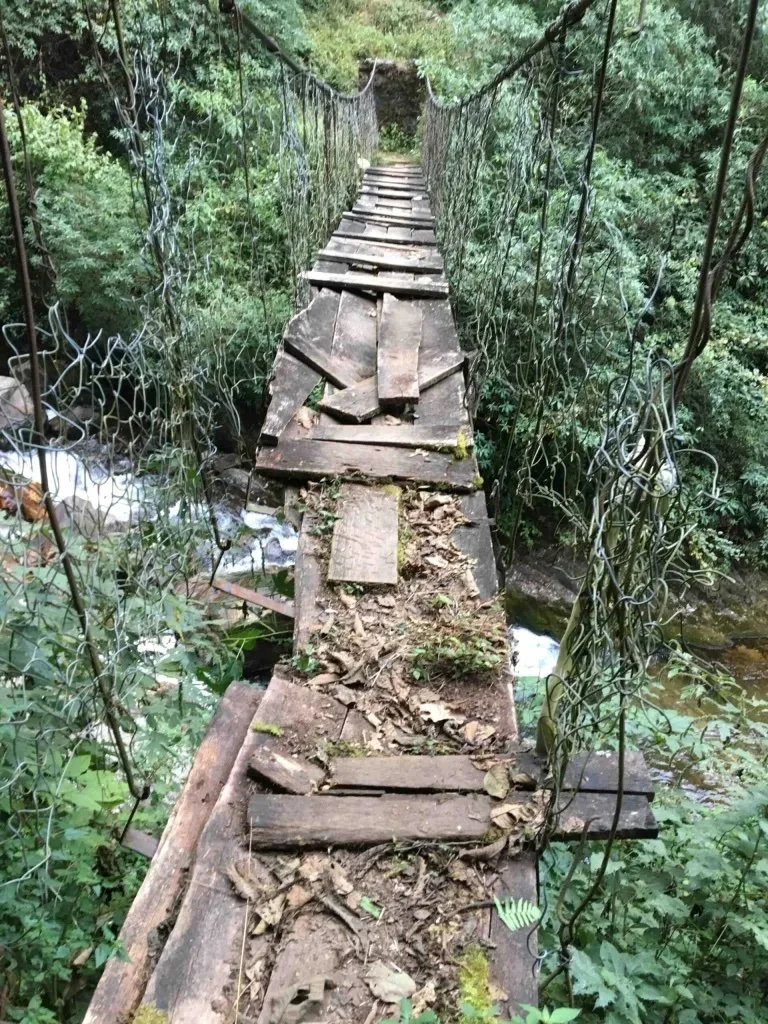
Some of the wooden bridges were a challenge!
The Kanchenjunga Conservation Area is located in Far Eastern Nepal. You can fly into either Bhadrapur (if you want to trek from the North side) or Suketar (for the South).
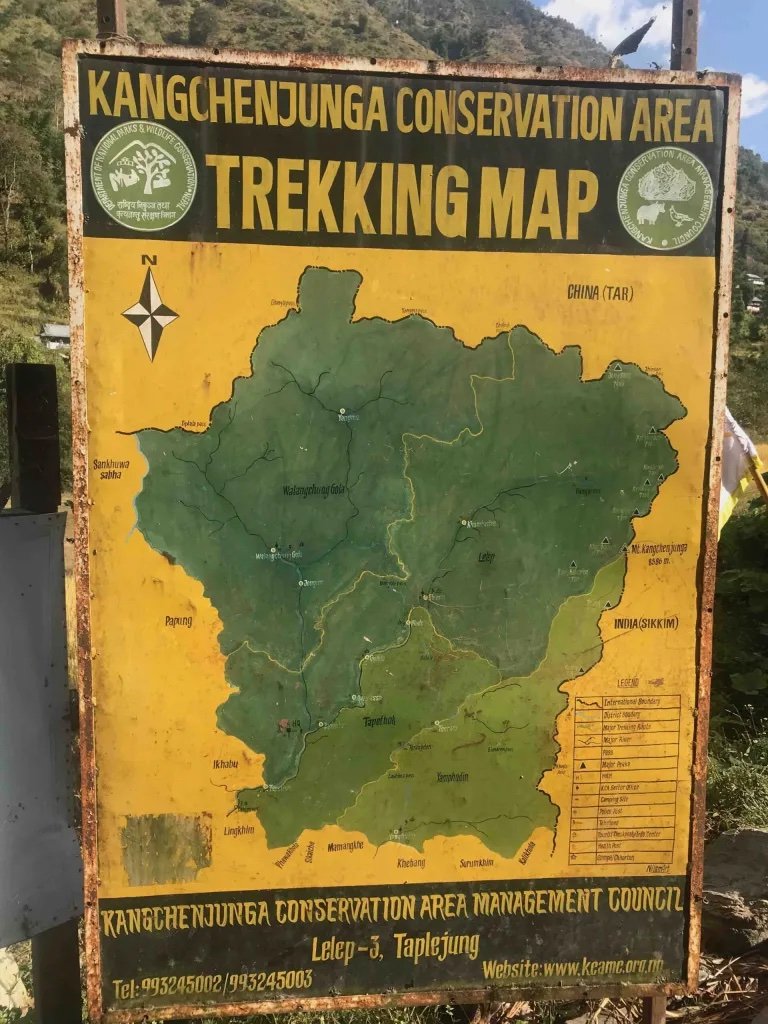
Kanchenjunga Conservation Area
A permit is required for the Kanchenjunga Conservation Area.
Compared with the Khumbu, the Kanchenjunga region is much less dry and dusty. There are also a lot less helicopters and trekkers!
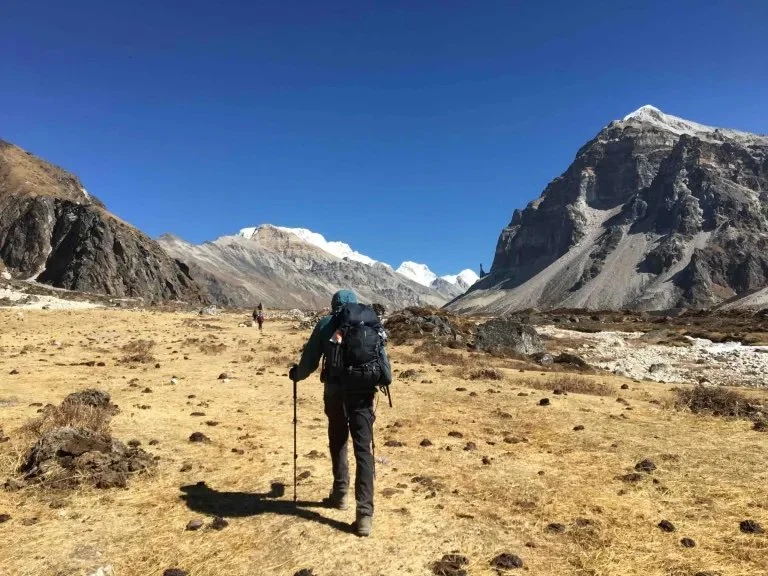
Trekking to North Base Camp
Best time of year to trek is October/November when the skies are clearer. You can also trek in March/April but there could be more cloud or rain.
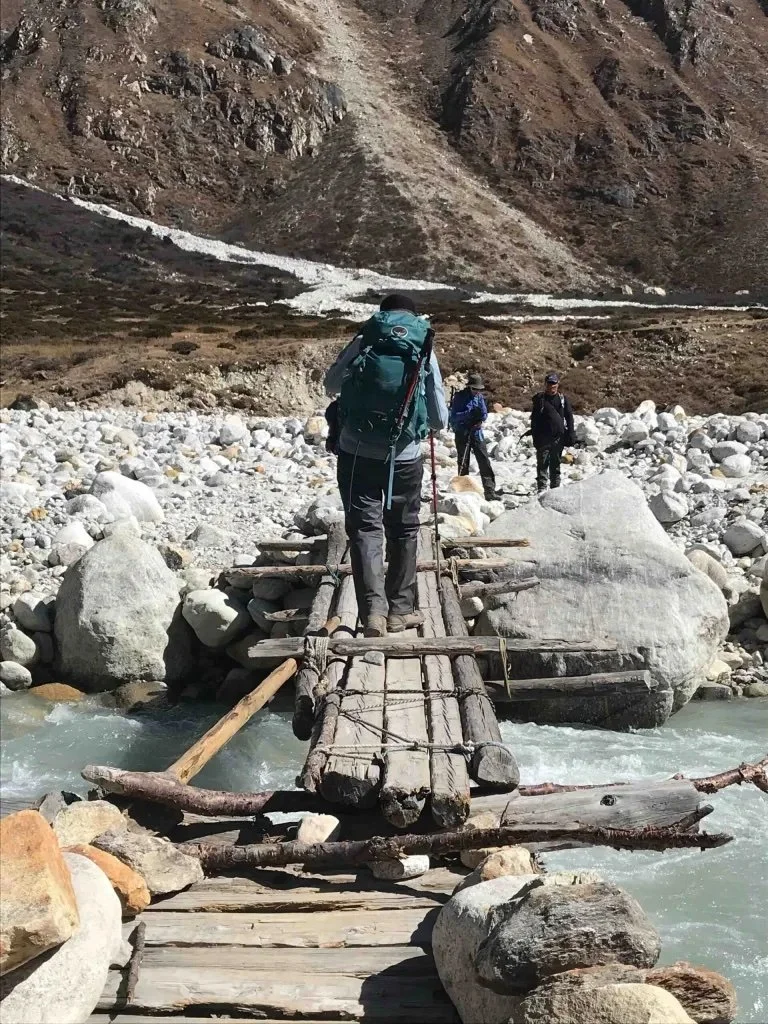
Another interesting wooden bridge